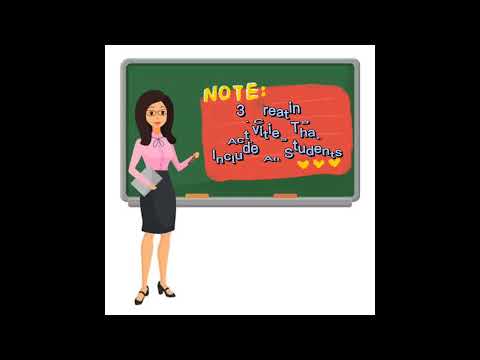
[0:00]Good day everyone. Here are the six reporters of the subject ELT 2 from the Bachelor of Secondary Education Second Year Section B. And now we are going to present to you the language and inclusive basic education issues and challenges. Before we proceed to our lesson, let me show you some goals of this lesson. So at the end of the lesson, students are expected to conduct research on language in the context, demonstrate deeper and wider understanding of language by relating it to its role in inclusive education. And identify the issues that inclusive education faces when it comes to language. To start, let me discuss to you the definition of language and inclusive basic education. So the principal method of human communication consisting of words used in a structured and conventional way and conveyed by speech, writing, or gestures. Education is an important aspect that children should acquire and need to take in order to gain knowledge as well as to enhance their skills that they possess. Traditionally, we have two kinds of education being offered, one for students with abilities or the education in special school, and one for everyone else or the education in regular classroom. Obviously, there is this division of learning or education that is being provided to children who are normal and those who have disabilities. Special education may be best described as a purposeful intervention designed to overcome or eliminate the obstacles that keep children with disabilities from learning. In other words, it is about providing children with disabilities with individualized plans of instruction to help them succeed. Inclusive Education means different and diverse students learning side by side in same classroom. They enjoy field trips and after school activities together. They participate in student government together and they attend the same sports meets and plays. Also, inclusive education values diversity and the unique contributions each students brings to the classroom. In a truly inclusive setting, every child feels safe and has a sense of belonging. Students and their parents participate in setting learning goals and take part in decisions that affect them. And now, before we proceed to the issues and challenges of inclusive education, here are some key issues to consider in relation to language and education, according to Helen Pennock and Samantha Heport of 2008. Many children, especially those from ethnic minority groups, use a different language at home from that used in school. If they don't speak school's language, they may not be accepted, may struggle to make progress or drop out early. Here are some challenges that teachers face in an inclusive classroom. First, lacking experience in an inclusion setting. Some teachers have not been exposed to special needs classroom and this can be a disadvantage. New special education teachers may find the first year to be especially difficult. Educators need to coordinate efforts and understand the needs of the classroom in terms of developing skills and lesson plans. Second, lacking experience with severe and profound disabilities. Students with severe and profound disabilities require more adaptation and medical attention than the average students. So teachers must be skilled in handling severe disabilities by creating lesson plans based on individual abilities and adhering to each child's dietary needs. If the teacher doesn't have sufficient experience, the child may not progress in their skills or in the worst case scenario, they could experience adverse medical incidents. Third, creating activities that include all students. Special needs inclusive classrooms must be able to involve all of the students in all of the classroom activities. Teachers need to address how the students will communicate with each other and encourage everyone's participation. Fourth, educating students with less, less severe disabilities. When there are children of all abilities in a classroom, both physical and academic, children in the middle can easily fall between the cracks. These children might have learning disabilities, hearing impairments, ADD or language delays to name a few examples. Providing the right amount of attention and adaptation can be challenging for teachers, especially if there is a higher teacher to student ratio. Good day everyone. I am Joverlyn Marino Tiol. Today I am going to continue the report of Miss Kesia about what are the challenges to teacher face in inclusive classroom. Let's talk about dealing with death. Death is a difficult for any teacher to explain their students. When you have a special needs inclusive classroom, there may be students with chronic illness and teachers may have to help their class process the death of a classmate. Not enough teacher or not having enough teacher aids. Normally, inclusive classrooms have a regular educator and special needs educator. Due to the nature of a classroom and its size, it is imperative to have an appropriate number of teacher aids to assist the teacher with day to day activities. But teacher didn't get often the resources they need including the teacher aids. Teaching compassion to students. Not all students have been exposed to person with special needs or abilities before and this becomes a challenge for teachers. Teachers must not tolerate insensitivity and cruelty with their student. They must teach that all student are be treated with same respect and regardless the ability. Dealing with parents of typically developing students. Just like the students, some parents are not used to dealing with persons with special needs or student with special disabilities. Teachers need to convey to parents how the classroom is conducted and they need to reassure parents that is that every student needs will be met. Addressing individualized lesson plan. Individualized education programs are important for helping special needs students succeed. Because there are varying abilities in an inclusive classroom, teachers need to balance multiple IEPs while addressing individual academic needs based on ability of each students. Coordinating therapies. A special needs inclusion classroom needs to be well organized and follow for student to attend therapy sessions. However, this becomes a challenge in planning day-to-day activities and keeping all students engaged and learning. So why inclusive education is important? Inclusive setting provide a better quality education for all children and are instrumental in changing discriminatory attitude. So is calls of provides the context for child first relationship with the world outside their families, enabling the development of social relationship and interactions. Respect and understanding grow when student of diverse abilities and backgrounds play, socialize and learn together. Education that excludes and segregates perpetrates discrimination against traditionally marginalized groups. When education is more inclusive, so are concepts of civic participation, employment of and the community life. So let's talk about the synthesis and generalization of our topic. The overall overview of the discussion is to point out the issues and challenges in an inclusive basic education. Based on UNESCO estimation, 40% of school age children don't have access to education in a language that they understand. That's why attaining a better inclusive education is a must.
[9:54]Conclusion and practical application of our topic. In conclusion, it is important to continually improve language practice in education, rather than aiming for unrealistic short-term targets or sudden big changes. Inclusive is indeed important to each student.
[10:23]So that's all for our report. Thank you everyone and hope you learn a lot from us. Thank you.