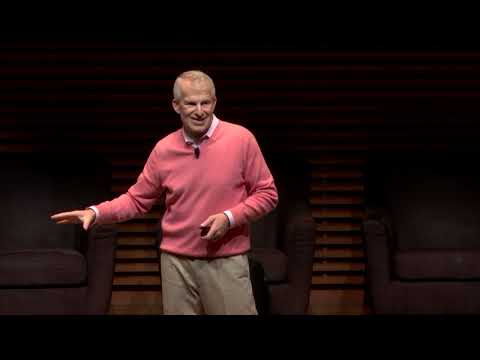
[0:01]Raise your hand if you have recently had to introduce yourself or make small talk. Yes, that is what today is all about, how to speak better in the moment. My hunch is, for many of you, introducing yourselves and making small talk at some points was challenging. It's awkward, it can be uncomfortable. So today I want to talk about how we can think faster and talk smarter in those moments where we're put on the spot to think and act quickly. We all know that speaking in plan situations, presentations, pitches, meetings with agendas, can be hard. But it can be much harder to speak in the moment. And if you think about it, most of our communication happens in the moment. It's things like making a toast, answering questions, giving feedback, introducing yourself, answering questions. These are the things that can be very challenging for us. So today I'd like to walk you through a methodology that I developed in service of needs of our students here at Stanford. Many years ago, the Deans came to me and said we have a problem. The problem is this, our very bright Stanford MBA students are struggling to answer those cold call questions from their professors. You remember back here when people would say, what do you think and you had to respond? So I did a deep dive into research in psychology, anthropology, sociology, improvisation, neuroscience, and came up with a methodology now that all Stanford MBAs within the first three weeks of their time here have an opportunity to take and it turns out, it helps them feel more comfortable and confident not just answering questions. But in standing up in class and giving a position and many other situations that they find themselves in when they leave here, interviewing for jobs, giving feedback to employees, etc. So today is going to be not just listening to me, but it's going to be participative. And we're going to start, it's not hard, some of you looking at each other going, oh no, what's he going to make me do? Pretty simple, I'd like you all to read this sentence. And what's more important to me than the meaning of the sentence is I'd like for you to count the number of F's, the letter F. How many F's do you find? I'll give you three or four seconds to do it. Keep the answer quiet to yourself. How many F's? I wish my MBA students were as quiet and thoughtful as you are right now.
[2:44]All right, shh. All right, raise your hand if you found three F's. How many found three? Excellent, very good. Anybody find four? Ah, anybody find five? How about six? There are six F's. What two letter word ending in F did many of us miss? So why do I do this activity? I have done this in every workshop, every keynote I ever deliver. Why? Because this is an exact analogy of what we're going to be doing here today. Many of us miss little things that make a big difference in our communication. Now, the other reason I do this is 14 years ago when I first saw this, I found three, I felt really stupid and I'd like to pass that. So we're going to identify little things that make a big difference to make us more effective in our spontaneous speaking. So I want to introduce you to a six-step methodology that we can use to become better at speaking in the moment. And the six steps divide into two categories, mindset and messaging. The first step has to do with managing anxiety, taming the anxiety beast. Most people get nervous speaking in spontaneous situations. In fact, most people get nervous speaking in any high-stakes situation. We have some research that says upwards of 85% of people feel nervous in high-stakes situation and I think the other 15% are lying. So let me ask you this, how do you feel when you watch a nervous speaker present? Now, I know a few of you probably like watching people suffer, but most of us don't. How does it feel? Just shut out. How, how do you feel when you see a nervous speaker present? Okay, so uncomfortable, empathetic and I heard some people say, I actually feel anxious myself. I call that second-hand anxiety. So if for no other reason, we should learn to manage our anxiety so our audience can focus on us and not be distracted. So when it comes to managing anxiety, we have to take a two-pronged approach. We have to manage both symptoms and sources. Symptoms are the things that we physiologically experience what goes on in our body. And sources are the things that initiate or exacerbate that anxiety. So I'd like to hear from some of you, what happens for you when you get nervous when you're put on the spot? I'll start. I blush and I perspire. What happens for some of you? Mouth goes dry. Mouth goes dry. I call this plumbing reversal. What's normally dry gets wet and what's normally wet gets dry. So you get sweaty palms but dry mouth, really weird, right? What else happens? Yeah, you freeze, you can't remember what to say. What else happens? Please. Yeah, you feel your heart pounding. Right? Some of us get shaky. These are normal and natural responses to anxiety. Your body sees speaking in the moment as being under threat and it invokes the fight or flight response. And these are normal and natural responses. But they're things we can do to address these. Now, allow me to share a few with you. The first and best thing you can probably do is to take a deep belly breath. The kind of breath you would take if you've ever done yoga or Tai Chi or Chigong, a deep belly breath. And what's interesting is it's the exhale that's more important than the inhale. So my rule of thumb, or shall I say my rule of lung is you want your exhale to be twice as long as your inhale. And if you take two or three of these deep belly breaths, you'll actually reduce the rapid heart rate, the rapid breathing that causes you to speak faster and you'll feel calmer. So before you walk into a room where you think you might be asked for feedback or you know questions are coming, or before you unmute on that zoom, take this deep belly breath and it will help. Now if you get dry mouth and you know you're going into a situation where you might have to speak in the moment, drink some warm water. Suck on a lozenge or chew some gum. Obviously you don't want to do that while you're in the midst of speaking, but that will help reactivate those salivary glands. If you're like me and you blush and you perspire, hold something cold in the palms of your hand. The palms of your hand are thermoregulators for your body. Just like your forehead or the back of your neck if you've ever had a fever and you put a cold compress on your head to cool down. Because your heart rate is going up and because your body tenses when you're stressed, you have more blood going through tighter tubes, your blood pressure goes up. And that causes you to get hotter, it's like you're exercising. So we can reduce the sweating and the blushing by cooling ourselves down. In fact, before I started speaking today, I was holding a cold bottle of water to help. So these are some of the things we can do to manage our symptoms of anxiety. If I didn't talk about a symptom you have, there are resources I'll share at the end of the talk that can help you find ways to manage your anxiety. Now, there's another side too. We have to think about sources. Sources are the things that initiate or exacerbate our anxiety. There are many, let me talk about one. Many of us are made nervous by the goal of what we're trying to achieve when we communicate. My students want to get a good grade. The entrepreneurs I coach want to get funding. You might want to get a new job or you might want to get your project supported. So what makes you nervous is the fact that you might not achieve that goal. In other words, what's making you nervous is a potential negative future outcome. So how do we short-circuit that? We become very present-oriented. Because if you're in the moment, by definition, you're not worried about the future. So how do we get present-oriented? One way is to do something physical. Walk around the building before you go in for that job interview. Another way is to listen to a song or a playlist, just like athletes do. You can do what I do. I get present-oriented by talking to people. Before I got up here on stage, I was talking with many of you. That helps me get present-oriented. I can't engage in a conversation and be thinking about what might go wrong in my presentation or Q&A session. Start at 100 and count backwards by 17. That'll get you present-oriented. I know I'm in front of a crowd that's trying. The first one's easy, 83, the next one's hard. My favorite way to get present-oriented is to say tongue twisters. You can't say a tongue twister right and not be in the present moment. Some of you are going, uh oh. That's right, I'm going to ask you to say my favorite tongue twister. I said this tongue twister right before I walked out here. It warms me up and it gets me present-oriented. Many of us assume that we can just go from silence to brilliance without warming up our voices. But you know, if you've ever played a sport or exercised or played a musical instrument, you should warm up first. So let's try it. My favorite tongue twister takes five seconds to say, has three phrases. And if you say one of the phrases wrong, you'll say a naughty word, so I'm listening to hear. Okay, let's try it. Repeat after me. I slit a sheet. I slit a sheet. A sheet I slit. A sheet I slit. And on that slitted sheet I sit. And on that slitted sheet I sit. Excellent. Nobody said that naughty word and I'm sure you all know what it is. So by managing our anxiety, both symptoms and sources, we prepare ourselves to be better when we speak in the moment. The second step in our process has to do with maximizing mediocrity. We get in our own way. I have the audacity in front of my Stanford MBA students on the first day of class to say, maximize mediocrity. Their jaws drop. They've never been told to be mediocre. But why do I recommend this? It boils down to this. We are the biggest impediment to our ability to speak spontaneously in the moment. We get in our own way. And we do it through all the judging and evaluating that we do of the material that we're thinking about saying. We get in our head. Here's why this is problematic. Think of your brain as a computer. This is not a perfect analogy, but for this point it works. You know on your laptops or your phones when you have a lot of apps and windows open, how the performance of each one of those is a little less good because the others are open. That's because the bandwidth is less. The same is true with your brain. When I am evaluating and judging everything I'm saying as I'm saying it, I have less cognitive bandwidth to focus on what I'm actually saying. So when we are evaluating ourselves as we're speaking, we're doing ourselves a disservice. Now, be very clear, I am not saying you should never judge or evaluate your speaking, you should. But we can turn the volume down a little bit to give us more resources so we can be more present and be more effective in what we're saying. So the true sentence that I tell my students at the end, I start with maximize mediocrity and then I end the class by saying, maximize mediocrity so you can achieve greatness. If you give yourself permission just to answer the question, just to give the feedback, just to have the small talk, then you put yourself in a position to do it very well. But when I say to myself, I have to give the right answer, the best feedback, I need to be the most interesting in small talk, it reduces the likelihood that you'll do those well. So step one is manage anxiety. Step two is turn down that volume on that mental observation and evaluation we're doing and that puts you in a position to be more present and more engaged. The third step of the methodology has to do with the fact that many of us see speaking in the moment and in general as threatening and challenging. If I were to tell any of you at the end of the meeting you're running that you're going to get some questions from your audience, many of you aren't like, oh, that's great. I can't wait. You say, oh no, I better do a good job. I'm afraid they're going to see what I said is wrong, they're going to challenge me. Many of us see these situations as threatening and challenging. And when we do so, it impacts not just what we say, but how we say it. We tend to retreat. We make ourselves small, our answers are curt, our tone is harsh because we feel we have to defend. There's another way to approach this. And before I share with you that way and give you some tools, I want you to actually have an experience of it. So I'm going to ask you to play a very simple improvisation game with me. It's called give a gift. All of us in our lives have had the experience of giving a gift and getting a gift. So you know how to play this game, but we're going to practice. I'd like everybody to take out an imaginary box. Will you do this with me, please? Here's your imaginary box. On the count of three, I'd like you to just practice giving it and then give to give the gift, you just extend your arms. Everybody ready? One, two, three, give a gift. Perfect, very good. Now, when you receive a gift, you do it in reverse. Ready? One, two, three, you've received a gift. Perfect. So here's what we're going to do. In a moment, I'm going to ask you to find somebody sitting near you. You're simply going to introduce yourself if you don't know and you're going to play the give a gift game. One of you will give a gift to your partner. Your partner will take the imaginary gift, open the box, look inside, look at the partner and say thank you for the, and you're going to say the first thing that pops into your head. So you might say, thank you for the car. Thank you for the pen. Thank you for the airplane. It doesn't even have to fit in the box. Your partner who gave you the imaginary gift, upon hearing it is going to explain to you why they gave it to you. Do you see how there are two acts of spontaneity that happen in this activity? And then you'll switch. So again, when it's your turn to give, you give the gift, your partner receives the gift, they open up the box, they look inside and they thank you for the first thing that comes to mind. By show of hands, how many of you already know what's in your box? Ah, over half of you raised your hands. Yes. Remember what I said in the previous step, how we want to do well and we want to make sure we're right. So you've okay, I know there's going to be a dog bone in my box. That's perfect, I'm done. I want you literally when you open up the box to say the first thing that comes to your mind. I have to tell my MBA students to keep it clean and keep it legal. I'm sure I don't have to tell you that here. But I want you to name it and then your partner upon hearing it is immediately going to explain and then you're going to switch. This activity should take two minutes. I will ask you to come back in about two minutes. So find somebody sitting next to you, introduce yourself, the person who woke up earliest this morning goes first. I've learned a long time ago as a teacher, if you don't say who goes first, everybody argues on it. All right, find a person. Thank you, by the way for doing this activity. I saw lots of smiles. Looks like you were having fun. I am simply going to move my arm across the audience and as my hand points in your general direction, will you just call out what you found in your box? I just, I love hearing what people gave themselves. Just start shouting out what you gave yourselves. CleanX, tires. Okay. Catnip, I heard. Yes. Pumpkin, notes. Did I hear broccoli? Oh, yes. Dogs. Poop. Okay, yes. Sweater. Excellent. You guys gave yourselves wonderful gifts. It's a bit of a Rorschach test, too. It tells us a little bit about you, but we won't go there. Let me ask you this. How did it feel when you gave the gift and you were waiting to hear what you gave? Many of you looked excited. I see many of you smile. You, what did I give? What did I give? And then all of you embraced a rule that comes from improvisation. I am a huge fan of improv and I have had wonderful improv teachers here on this campus, Patricia Ryan Madison, Adam Tobin, Dan Klein. These are improv experts who've taught me the value of improv. And all of you just executed the number one rule of improv, yes and. You didn't say, I did not give you a dog bone. No, you said, of course I did and here's why, right? You embraced it right away. What if, what if when somebody asked you a question or asked you for feedback, you saw it as an opportunity just like you saw this activity is an opportunity. Now, I am not naive. I know sometimes people when they ask us questions or ask us for feedback, they're really putting us on the spot. They want to challenge us, they're coming after us, but even in those moments if I can see it as an opportunity to connect, to learn, to find some area of commonality, it can change everything. I will step in, I will be bigger in my response, my tone will be more collaborative, my answers will be more detailed. By seeing spontaneous communication as an opportunity, as a gift, not a threat, it changes our entire approach. So how do we do this? How do we execute on it? On the new book I wrote, thinking faster, talking smarter, I introduce several tools we can use to see things as opportunities. The first comes from this notion of growth mindset which Carol Dweck on this campus helped develop and champions. It's wonderful and her work is fantastic. One area of her work in growth mindset, which really essentially says that when we are faced with a challenge that doesn't go necessarily the way we want it to, we can learn and grow and begin to get better at that versus a fixed mindset, which says, that's just how we're built, that's just the way it is. A growth mindset, again, opens to opportunity. And one aspect of it that I really resonate with is this notion of not yet. Just because something didn't go the way you want to, doesn't mean it never will go the way you want. It just means not yet. Maybe you don't have the skills, you don't have the practice. But it means you can get there. So by adopting a not yet mindset, it helps us see things as opportunities, opportunities to learn, opportunities to grow. So when you meet with a frustration in your life, especially around communication, say to yourself, not yet. We've already talked about yes and. Yes and is where we see the possibility of connection. So even if you're in disagreement, in a negotiation that's happening in the moment, you can look for those areas of commonality. Where is it that we agree? Where is the yes and from there, build? The third of these comes from the world of basketball. Many of you are familiar with Mike Shezski, former basketball coach, Coach K. One of the things he is credited with instilling in his players, but in all of sport is this notion of next play. If you're an athlete, say a basketball player and you miss a shot. Instead of ruminating and getting frustrated with yourself, move on to the next play. Because the reality is if I miss my shot and I sit there thinking about how bad it was, how I should have made it, the play is already ensuing and the other team might be scoring a shot. I have to move to next play. And the same is true when you're in the midst of a conversation, small talk, feedback situation, if something happens that doesn't go exactly the way you wanted to, next play, keep moving. Now while rumination in the moment is bad, reflection after the fact is very good. So I'd love for you in the moment to move to the next play, but later that day, reflect what worked and what didn't. Many of us treat our communication as that definition of insanity. You know, doing the same thing over and over again, expecting different results. If you don't reflect and learn and think about it, you're not going to change. So in the moment, next play, later in the day, reflection. And then the final of these steps has us reframing the way we think about mistakes. Many of us try to avoid mistakes. We feel a mistake is a bad thing.
[21:33]Now, if you think about it, we learn through mistakes. If you watch kids as they develop, they make lots of mistakes and that's how they learn. We can take benefit from that as well. But we have to look at them differently. Rather than mistakes, I'd like you to think of them as missed takes. You know, in television and film, directors will have their actors do multiple takes of the same scene. You've seen that clapboard that says take one, take two. No one scene is wrong. They're just trying to optimize and try different things. So when you do something that doesn't go the way you want, think to yourself, take two. I'm just going to do it again differently. It wasn't bad, it wasn't wrong. I'm just going to try it differently. And if you take that approach to your actions and the things that don't go the way you want, one, it keeps you in a much more positive frame of reference and it encourages you to think and learn from what just happened. So these four tools, not yet, yes and, next play and missed takes, are the ways in which we can look at our communication in the moment as opportunities and not threats. So we get out of our own way, after we manage anxiety, we see things as being opportunities, not threats, and then our fourth step has to do with listening. Most of us are not good listeners. We listen just enough to get the gist of what somebody is saying and then start thinking, judging, evaluating, rehearsing what we want to say. We don't listen deeply. And if you don't listen deeply when you're communicating in the moment, you can make some errors. Imagine this, we walk out of a meeting together. You turn to me and you say, how do you think that went? I hear feedback and I start listing all the things that we did wrong, all the things you could have done better, how we can make sure that we don't make the same errors next time. But had I really listened in that moment? I might have noticed you came out the back door, not the front door. You were looking down and talking more quietly than you usually do. In that moment, what you wanted was not feedback, but you wanted support. And by virtue of giving you all this constructive feedback, I actually did you a disservice and might have damaged the relationship we have. So we need to listen in a very different way when we have to speak spontaneously, so we really understand what's needed in the moment. So I'd like to give you some advice about how to listen better, and I have to caveat this, that my wife gets really upset when I teach listening. Because she says, I'm still a work in progress. So, listen to what I say, not necessarily what I do. First, when you are listening, you need to listen intently. I heard a professor at another university say, he was he he was he taught music and he was talking about jazz, and he had a jazz teacher. And I have to look this guy up to get his name, but he said, we need to listen until you sweat. And I love that approach. We listening is hard work. So the first thing we need to do is when somebody's speaking, we have to listen to what's the bottom line of what they're saying. What's the crux of what they're trying to get across? And then second, we need to employ a strategy that I learned from a colleague here. His name is Collins Dobbs. And Collins teaches critical and crucial conversations here at the business school. And he has a methodology to help do that and that methodology applies beautifully to listening. It's three things, pace, space, grace. To listen well, you have to give yourself a little bit of each of those. We have to slow things down. The world moves very quickly. We've got a lot going on. If I slow down, I can listen better. So the first step is to slow things down. Second, you have to give yourself space. Sometimes it's physical space. Move to a location where you can actually hear better. As I get older, everything is louder in the ambient sound. Move to a place where you can actually hear. But also mental space. Give yourself permission to be present-oriented in this moment listening to this person. And then finally, grace. And grace is to give yourself permission to pay attention to what's going on in the environment. How the person says what they say, not just what they say. And grace refers to listening to your own intuition. We have heard lots of things. We have seen lots of things in our lives and we get intuitions that come to us based on what we hear and respect those as well. We often think listening is only what's coming in, but you can also listen to what's happening inside you. So but with a little bit of pace, space and grace and focusing on the crux of what somebody is saying, you can listen better. One of the best tools we can use to listen better is to ask either clarifying questions or to paraphrase. We have this notion that we have to respond in the moment right away. If I don't respond right away, it means I'm not confident, it means I don't know my stuff. And yet, we can pause a bit to actually reflect on what we're listening to before we respond. So I can literally just take a pause. Some of us feel pausing is bad, but pausing can be great. I can ask a clarifying question, that gives me a little bit of time. Or I can paraphrase, which is where I take something you've said, synthesize it and present it back to you in a way that's distilled down. So it's not like what a five-year-old does, who just parrots back what you say. That's annoying. But you look for the key idea and you repeat it back. The thing with asking follow-up questions and paraphrasing is these are lower order cognitive skills. In other words, I can be thinking about what I want to say next while I'm doing those. So we're going to do a paraphrasing activity. It's very quick, very similar to what we did with give a gift. I in a moment I'm going to ask you to find a different partner in the room and I'm going to ask you to share a story of your name. And it can be anything related to your name you want. It can be very deep and meaningful, it can be fun. For 30 seconds, you're going to tell a story of your name. This activity is not about storytelling. This activity is about paraphrasing. Because the person you're telling it to is going to paraphrase what you said. And then they're going to ask a question because paraphrasing never happens by itself. It's always followed by something, maybe your answer, maybe connecting to the agenda, maybe asking a question. So let me give you an example of what this is like. So I'm going to tell you a story about my name for 30 seconds. I'm going to ask for a volunteer if you'd like to paraphrase what I said and then another volunteer to ask a question. Now, you do not need to answer the question. But by training yourself to ask a question immediately after paraphrasing, you're training yourself to keep the conversation moving. Paraphrasing is never something you do in and of itself. You always use it to move on. So here's the story of my name. My name is Matt. All through my childhood, I was teased mercilessly because Matt rhymes with everything. Okay? Lazy as a doormat, silly as a cat, you're fat. I was teased all the time. When my wife and I started our family, it was very important to me that our children not be named something that was easily teaseable. As a teacher, I have a built-in focus group. So I went into my classroom, I wrote the three names that my wife and I were willing to call our kids, and I gave my students five minutes to come up with the most heinous, mean, bad rhymes and anything they could, and we named my children the names that had the shortest lists. So that's the story of my name. Is there somebody here who'd be willing to just paraphrase my story? Again, a paraphrase gets to the crux of it. I see your hand here, sir. Yes. So that that wouldn't happen. Excellent, great paraphrase. Essentially, what he said for those of you who couldn't hear is you stress-tested your kids' names. Right? That's a great paraphrase. What is a reasonable question that you might ask? Yes. What are the kids' names? Yes. I'm not going to tell you because they would be very upset, but I'll tell you that my kids are not teased because of their names. Now, they're teased for lots of other things, but not their names. Do you see how paraphrasing can actually help you listen more intently? So here's what I'm going to ask you to do for all of you to practice. And thank you for that opportunity. Okay.
[30:20]All of us are here for our Stanford reunion. Let's imagine for your next reunion, you volunteer to help recruit people to come back to campus for reunion. So you're going to make a pitch.
[30:49]Let's go through each of these four together as a group. Can somebody think of a product or service that you would like to hear a pitch for? What would you like to hear me give a pitch for? Somebody suggest one. My book. My book, well, look at that. Well, thank you. All right. I appreciate that. So my new book is all about how to speak more effectively in the moment.
[31:52]What if you could feel more comfortable and confident when put on the spot so that you could answer questions well or give appropriate feedback? For example, imagine an upcoming job interview that you nail. That you get all of your points across in a way that really represents who you are. And that's not all. You can apply these principles to small talk, to apologizing and to even introducing yourself. Do you see how just answering those sentences gets you to a tight, clear pitch? So here's what we're going to do for all of you to practice. And thank you for that opportunity. Okay. All of us are here for our Stanford reunion. Let's imagine for your next reunion, you volunteer to help recruit people to come back to campus for reunion. So you're going to make a pitch. Let's go through each of these four together as a group. Can somebody think of a product or service that you would like to hear a pitch for? What would you like to hear me give a pitch for? Somebody suggest one. My book. My book, well, look at that. Well, thank you. All right. I appreciate that. So my new book is all about how to speak more effectively in the moment. What if you could feel more comfortable and confident when put on the spot, so that you could answer questions well or give appropriate feedback? For example, imagine an upcoming job interview that you nail. That you get all of your points across in a way that really represents who you are. And that's not all. You can apply these principles to small talk, to apologizing and to even introducing yourself. Do you see how just answering those sentences gets you to a tight, clear pitch? So here's what we're going to do for all of you to practice. And thank you for that opportunity. Okay. All of us are here for our Stanford reunion. Let's imagine for your next reunion, you volunteer to help recruit people to come back to campus for reunion. So you're going to make a pitch. Let's go through each of these four together as a group. Can somebody think of a product or service that you would like to hear a pitch for? What would you like to hear me give a pitch for? Somebody suggest one. My book. My book, well, look at that. Well, thank you. All right. I appreciate that. So my new book is all about how to speak more effectively in the moment. What if you could feel more comfortable and confident when put on the spot so that you could answer questions well or give appropriate feedback? For example, imagine an upcoming job interview that you nail. That you get all of your points across in a way that really represents who you are. And that's not all. You can apply these principles to small talk, to apologizing and to even introducing yourself. Do you see how just answering those sentences gets you to a tight, clear pitch? So here's what we're going to do for all of you to practice. And thank you for that opportunity. Okay. All of us are here for our Stanford reunion. Let's imagine for your next reunion, you volunteer to help recruit people to come back to campus for reunion. So you're going to make a pitch. Let's go through each of these four together as a group. Can somebody think of a product or service that you would like to hear a pitch for? What would you like to hear me give a pitch for? Somebody suggest one. My book. My book, well, look at that. Well, thank you. All right. I appreciate that. So my new book is all about how to speak more effectively in the moment. What if you could feel more comfortable and confident when put on the spot so that you could answer questions well or give appropriate feedback? For example, imagine an upcoming job interview that you nail. That you get all of your points across in a way that really represents who you are. And that's not all. You can apply these principles to small talk, to apologizing and to even introducing yourself. Do you see how just answering those sentences gets you to a tight, clear pitch? So here's what we're going to do for all of you to practice. And thank you for that opportunity. Okay. All of us are here for our Stanford reunion. Let's imagine for your next reunion, you volunteer to help recruit people to come back to campus for reunion. So you're going to make a pitch. Let's go through each of these four together as a group. Can somebody think of a product or service that you would like to hear a pitch for? What would you like to hear me give a pitch for? Somebody suggest one. My book. My book, well, look at that. Well, thank you. All right. I appreciate that. So my new book is all about how to speak more effectively in the moment. What if you could feel more comfortable and confident when put on the spot, so that you could answer questions well or give appropriate feedback? For example, imagine an upcoming job interview that you nail. That you get all of your points across in a way that really represents who you are. And that's not all. You can apply these principles to small talk, to apologizing and to even introducing yourself. Do you see how just answering those sentences gets you to a tight, clear pitch? So here's what we're going to do for all of you to practice. And thank you for that opportunity. Okay. All of us are here for our Stanford reunion. Let's imagine for your next reunion, you volunteer to help recruit people to come back to campus for reunion. So you're going to make a pitch. Let's go through each of these four together as a group. Can somebody think of a product or service that you would like to hear a pitch for? What would you like to hear me give a pitch for? Somebody suggest one. My book. My book, well, look at that. Well, thank you. All right. I appreciate that. So my new book is all about how to speak more effectively in the moment. What if you could feel more comfortable and confident when put on the spot so that you could answer questions well or give appropriate feedback? For example, imagine an upcoming job interview that you nail. That you get all of your points across in a way that really represents who you are. And that's not all. You can apply these principles to small talk, to apologizing and to even introducing yourself. Do you see how just answering those sentences gets you to a tight, clear pitch? So here's what we're going to do for all of you to practice. And thank you for that opportunity. Okay. All of us are here for our Stanford reunion. Let's imagine for your next reunion, you volunteer to help recruit people to come back to campus for reunion. So you're going to make a pitch. Let's go through each of these four together as a group. Can somebody think of a product or service that you would like to hear a pitch for? What would you like to hear me give a pitch for? Somebody suggest one. My book. My book, well, look at that. Well, thank you. All right. I appreciate that. So my new book is all about how to speak more effectively in the moment. What if you could feel more comfortable and confident when put on the spot so that you could answer questions well or give appropriate feedback? For example, imagine an upcoming job interview that you nail. That you get all of your points across in a way that really represents who you are. And that's not all. You can apply these principles to small talk, to apologizing and to even introducing yourself. Do you see how just answering those sentences gets you to a tight, clear pitch? So here's what we're going to do for all of you to practice. And thank you for that opportunity. Okay. All of us are here for our Stanford reunion. Let's imagine for your next reunion, you volunteer to help recruit people to come back to campus for reunion. So you're going to make a pitch. Let's go through each of these four together as a group. Can somebody think of a product or service that you would like to hear a pitch for? What would you like to hear me give a pitch for? Somebody suggest one. My book. My book, well, look at that. Well, thank you. All right. I appreciate that. So my new book is all about how to speak more effectively in the moment. What if you could feel more comfortable and confident when put on the spot, so that you could answer questions well or give appropriate feedback? For example, imagine an upcoming job interview that you nail. That you get all of your points across in a way that really represents who you are. And that's not all. You can apply these principles to small talk, to apologizing and to even introducing yourself. Do you see how just answering those sentences gets you to a tight, clear pitch? So here's what we're going to do for all of you to practice. And thank you for that opportunity. Okay. All of us are here for our Stanford reunion. Let's imagine for your next reunion, you volunteer to help recruit people to come back to campus for reunion. So you're going to make a pitch. Let's go through each of these four together as a group. Can somebody think of a product or service that you would like to hear a pitch for? What would you like to hear me give a pitch for? Somebody suggest one. My book. My book, well, look at that. Well, thank you. All right. I appreciate that. So my new book is all about how to speak more effectively in the moment. What if you could feel more comfortable and confident when put on the spot so that you could answer questions well or give appropriate feedback? For example, imagine an upcoming job interview that you nail. That you get all of your points across in a way that really represents who you are. And that's not all. You can apply these principles to small talk, to apologizing and to even introducing yourself. Do you see how just answering those sentences gets you to a tight, clear pitch?


