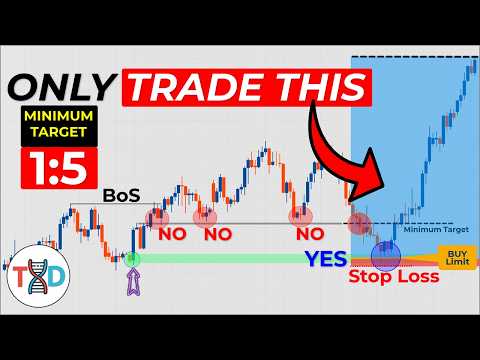
[0:00]Hey traders, welcome back to trader DNA. In this video, I'm giving you the ultimate NOS guy to mastering order blocks from absolute basics all the way to advanced execution. Whether you're brand new or already deep in the market, you need to watch this all the way through so every concept actually clicks. I'm breaking down three high probability order block strategies you can start using immediately. By the end of this master class, you'll understand exactly how to use the right way and turn them into consistent profits. This is the complete blueprint for trading with order blocks. Let's dive straight in. Let's lock in and really understand what an order block is. An order block is a critical zone on the chart where a massive amount of money got executed usually by big institutions or banks the so-called smart money. And when that plan of capital hits the market, it doesn't whisper, it moves price hard. So when you see a sharp explosive move from a specific area like this right here. That's your clue that smart money just stepped in. Huge by orders, slam into the market, price shoots up fast under the zone where all that heavy action happened, that's your order block. There are only two types of order blocks. Bullish order blocks formed by aggressive large by orders and bearish order blocks formed by powerful large cell orders. Um, in this video I'll mark bullish order blocks in blue and order blocks in purple but you can use whatever colors you like. Once you spot an order block that's where things get exciting because price loves to come back, test that zone and bounce. It happens again and again. Look right here, if you would bought at this order block, you could have locked in some serious profits. Clean, simple, powerful. Now you're probably thinking, wait, isn't this just important resistance? Great question. Yes, both order blocks and support mark important levels on the chart, but they are not the same. There are key differences between them and those differences matter. The first difference is how they're formed. Order blocks are born from explosive price knees out of a specific area. If price suddenly rockets away from a point, back zone white bear becomes your order block, market. Support and resistance are different. They form after multiple rejections. Price hits a level once and gets rejected comes back later and gets rejected again at the same spot.
[2:35]That's when you mark it as support or resistance. The second difference is how you draw them. Order blocks are thick zones, real areas on the chart. Support and resistance are usually thin lines and even when traders draw support and resistance is zones, they're still much thinner than order blocks. The third difference is how often they get retested. Order blocks are usually one time use. Once price retraces back into that order block and react. That's it. You can't rely on it again. But support and resistance that those levels can be tested over an over multiple times. Now, even though order blocks and support and resistance are different, you can absolutely combine them. For example, if an order block forms right when price is sitting near a resistance level, that's called confluence and confluence is powerful because when key levels line up, price has a much higher chance of reacting from that area. Before we even think about trading order blocks, you have to know how to identify them in the right way. Earlier, I said, if price explodes from a point, you can mark it as an order block. But hold on, it's not that simple, just because you see a big aggressive move doesn't automatically mean it's an order block. Not every strong push qualifiers. There are specific rules you must follow to confirm whether an order block is actually valid. Um, here are the three rules for spotting a valid order block. These are non-negotiable. If you don't understand these, you will not trade this strategy correctly. Period. Rule number one, for a move to qualify as an order block, it must create a gap right after it. Back gap is what traders call inefficiency or imbalance. And whenever you hear those words, just think, gap. Now, look at this example. We've got two strong bullish moves that look almost identical. Um, but here's the key difference on the left there's a gap between the first candle's upper wick and the third candle's lower wick. On the right, the wick overlap into the candle bodies, no gap, back gap on the left, that's the inefficiency, that's the imbalance. Even though both charts show powerful upward movement, only the left one is a valid order block because it has that gap. To draw it, take the first candle before the inefficiency and mark a rectangle from the top wick to the bottom wick. That's your order block.
[5:06]Rule number two. The order block must be unmitigated. Remember, this is usually a one-time use level. If price comes back and touches the order block, even with just a wick, it's no longer valid. It's been tested. So if you identify the gap, draw your order block and then see price tap into that zone, it's done. Uh while there are ways to trade a tested all the blocks, I'll explain those later. For now, lock this in. An order block is generally usable only once. Rule number three. This is the big one. An order block must cause a break of structure or a change of character afterwards. If those terms sound confusing, don't worry, I'm about to break them down quickly. Um, let's make this simple. Market moving trends either up or down. That's it. In an uptrend price does not just fly straight up. It moves with structure, it creates higher highs and higher lows. higher highs mean every new peak is higher than the last one. Higher lows mean every pull back low is also higher than the previous one. That's how an up trend builds. Now flip it. In a downtrend everything reverses. The market forms lower highs and lower lows. Um each rally stops lower than the previous high and each drop pushes lower than the previous low. That's bearish structure. In an up trend when price breaks above a previous high and print and new high that's called a break of structure. That's information the trend is still strong but trends don't last forever. At some point the market shifts and that shift happens when price breaks below a previous low and forms a lower low. That moment is called a change of character because the market just transitioned from bullish to bearish. The same cycle happens in a downtrend price keeps keeping lower highs and lower lows and when it breaks a previous low that's a break of structure. but if price suddenly breaks above a previous high and forms a higher high doing that down trend, that's a change of character. signaling the market is flipping back to an up trend. That's the fast um clear breakdown of what break of structure and change of character actually mean inside market trends. So how does all of this connect to order blocks? Simple, for an order block to be valid, it must lead to either a break of structure or a change of character afterwards. No break, no change, no valid It's that strip. Now look at this example. We've got a strong bullish move and we clearly see a gap and inefficiency. That tells us there's potential for an order block. But don't rush it. We cannot mark it yet. First, we wait. Um we need the market to prove itself with a break of structure or a change of character. Then it happens, price finally breaks above the previous high, boom. That's your break of structure. Only now do we boom, we go back and draw the order block on the first candle before the. Same thing here, another powerful upword move, another clear infiance and then price pushes up again forming higher highs, a break of structure, that confirmation looks it in. Now we can confidently draw that second valid order block.
[8:28]Let's break down another example. On this chart is printing higher high and higher low clean up trend structure. And right here we spot a potential order block because there's inefficiency, but hold up, price hasn't created a new higher high yet. Without that break, this is not a valid order block. We wait, then things shift. Price starts dropping and forms another potential order block. This time, bearish. and we see a strong bearish move with clear inefficiency on this red candle and then price smash through the previous low printing lower lows. That break is a change of character. The market just flipped from an uptrend into a down trend. Now we focus on the most recent bearwarish order block because is it lines up with the new downtrend. The early bullish order block invalid. No higher high, no confirmation. But this bearish one, um, it's valid because it directly causes the change of character. In this figure we're breaking down order blocks in the simplest way possible. First, price makes a strong push upward and we see inefficiency. That gap that hints at a possible order block, but there's no break of structure yet. No break means no confirmation, so for now the order block is not valid. Later, price drops, then rallies back up and creates more inefficiency, another potential order block. This time, price forms higher highs, but inside a smaller structure, um, that makes it a valid order block for that internal structure. Now zoom out, on the bigger structure, price also creates higher highs which means that earlier potential order block it just became valid too. So when you draw order blocks everything depends on which structure you're analyzing. quick recap. The three rules for a valid order block. One it must create a gap also called inefficiency or imbalance. Two, it must stay untested or unmitigated. Three, it must lead to a break of structure or a change of character. Spotting order blocks is powerful but the real and the one bullish and one bearish but potential isn't enough. Oh we need confirmation. First, the bullish order block. Yes, price moved up with inefficiency, but there's no clear break of structure. On top of that, price already came back and retested it. That means it's mitigated. In valid. Now look at the bearish order block. Price drops hard, creates lower lows and gives us a clean break of structure and it's still unmitigated. That's the difference. Based on this, only the bearish order block is . Once you've locked in the valid order block, don't chase price.
[11:34]Wait, let price retrace back into that level. When price touches the order block, we move to the next step, confirmation. Now we need to see if price actually reacts. Today that we drop down to a lower time frame like the 15 minute chart. On the 15 minute chart, we look for signs of bearish momentum, proof that price wants to reverse from the order block. You can use different here indicator like the map D, bearish classic patterns or even a shift in market structure. My go to confirmation, the bearishgling classic pattern. Simple, clean, powerful. It happens when a small bullish candle is immediately swallowed by a larger bearish candle completely ingulfing it. That's your reversal signal. Once that pattern prints, you enter a sell trade right after it forms. Put your stop loss just above the order block and set your take profit. that two times your stop loss. That's a solid risk to reward and this setup can deliver strong profits. Here's a quick multi-time frame cheat sheet. weekly high time frame, four-hour low time frame. daily high time frame, one hour low time frame, four-hour high time frame, 15 minute low time frame, one hour high time frame, five minute low time phone. and that's everything you need for strategy one. Strategy two ment traps. Anment trap happens when a smaller key level forms near a major order block. Picture this, a strong major order block sitting below and a minor key level forming just above it. That smaller level called thement often shows multiple projections. It's called anment trap because price will often break above that minor key level and then suddenly drops straight into the major order block before it exploded back up. traders who bought at the minor level expect a bounce. They get stopped out. Here's how you use it. When you see a minor key level above a major order block, place your buy order in the middle of the major order block, your trade only activates if price actually taps that order block. If it never gets there, you don't enter, no entry, no risk. This setup isn't random, it's strategic. Large institutions the so-called smart money want the best possible entry, but because they move massive capital, they can't just buy all at once without pushing price higher. Retail traders can click and enter. Institutions can't. If they buy aggressively, they drive the price up and ruling their own entry. So what do they do? They use endorsement levels. After forming an order block, they push price down by triggering the stop losses of traders who bought at the end of level. Those stops usually sit just below key levels, so it only takes a bit of selling to trigger them causing even more selling. That extra liquidity lets institutions re-enter at a better price before driving the market back up. Now, let's look at a real example. Price surge upwards creates inefficiency and break structure that confirms a valid order block. After that move, we see an unduezement zone with multiple rejection as a support level with a major order block below and a minor support level near it. This sets up a potential unduement trap. So I'm place so we place a limit by in the middle of the order block and wait. price drops break through the endless level and triggers our buy at the order block exactly as expected. Once triggered, we set the stop loss just below the order block and aim for a take profit two to three times the stop size. You can also target the endless zone as your take profit. And as you can see, this trade delivered.
[15:27]Strategy 3 break block. At the start of this video we said order blocks are usually one time use levels but there's a powerful twist when an order block gets broken we can still use it. That is called a breaker block. So what's a breaker block? It's a previously valid order block that price has broken through. Once price breaks it don't ignore it. When price retraces back to that same level it can now act as resistance and that rejection gives us an opportunity to enter a short right at the breaker block. Remember, just like regular order blocks, break blocks are typically effective only once after the break and the test, the edge is usually gone. Now, let's walk through it. On this chart, price explodes upward, creates inefficiency and prints higher high. That confirms a valid order block. Then, price reverses hard and breaks down through that order block. At the same time, it creates a change of character, shifting from bullish to bearish as it breaks below previous low. Now watch this. As price retraces back up towards the old order block, the level flips into resistance. That's our zone. We open a short there, place the stop loss just above the breaker block and set the take profit at two times the stops. In this example, price rejects the level, hits the target and delivers a clean profit. Now you've got all three strategies, time to execute. To help you start trading order blocks immediately, I've provided the order blocks all in one indicator but you can plug straight into your trading platform. This indicator automatically marks different types of order blocks on your chart. Unmitigated, mitigated and break block. It highlights them as clean colored boxes with labels so you can instantly see this the structure, no guessing, no confusion, you'll clearly spot potential reversal zones and continuation areas in seconds. I've also included a ready to use template in this video just upload it to your chat and everything sets up automatically for you. No complicated setup, the download link is in the description.