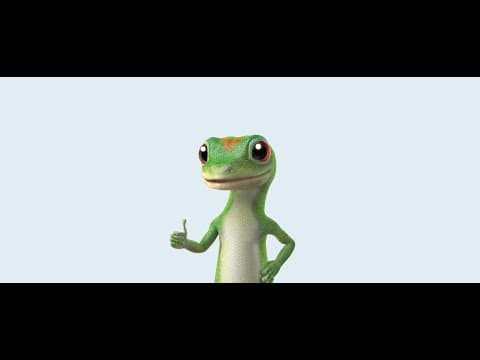
[0:02]Welcome back to Behavioral Science for Brands, a podcast where we connect academic insights and practical marketing to help build your business and improve your brand. Every other week, Richard and I sit down and we look at some of the country's best businesses to explore the behavioral science that powers them. I'm Michael Aaron Flicker and I'm Richard Shotton. And today we're going deep on Geico, one of America's largest auto insurance companies. Uh, originally named the Government Employees Insurance Company. Geico is now a household name. Let's get into it. Richard, in America, the right of passage of getting your first car, getting your license, having the freedom to drive is like a defining moment. But what many young teens do not appreciate is with great freedom, you the car, comes great responsibility choosing auto insurance. and great cost. And can be uh more expensive than your auto payment, depending on the type of car and type of insurance. Is it the same way in the United Kingdom or is choosing auto insurance, getting your first car not seen as as much of a uh life milestone. I think getting your first car is a big life milestone. Uh you can drive from 17. It's one of the first kind of properly adult things you can do. Yeah, yeah. And so for us, looking at Geico, has got some amazing behavioral science behind the brand that they've built. But it's also something that touches all of all uh all people in that they have to make this decision in what could seem like a very complex, how what type of coverage do I need? I you know, how do I go through this so building a brand that's welcoming and inviting, it really helps uh helps it be successful. So let's go back in time and learn a little bit about Geico. Originally founded in 1936, as we said, it's an acronym for the Government Employees Insurance Company. But they had a senior director of creative and brand named Gary Orland who said that name, not so easy to remember, not so easy to say. Doesn't really roll off the tongue. What if we shortened it? So they shortened it to Geico and the creative campaign that they launched in the late 90s, would come to define the brand, obviously the Geico Geico. And a lot of the things they do with the Gecko is really based on some pretty critical uh behavioral science techniques. Uh, but just to give everybody a scale of the business, um pre-tax profit was 3.6 billion in 2023. They're the third largest auto insurer today with 13.8 market share. And uh they spend over 800 million a year on advertising. So this is big business, but it's also uh big advertising. And so when you think about how they have created Geico, it really comes down to um building a brand that can create distinctiveness in buyers' minds. And of course, using their old name, the I got to even look at it to say it, the Government Employees Insurance Company, very hard to remember, very hard to distinguish. But they debuted the Gecko in 1999 and what we are going to learn about in today's episode is this concept of a fluent device. System One, a research agency out of uh the United Kingdom has written a very interesting and deep paper on this. We're going to talk about some of the highlights. But creating a fluent device like the Gecko helps shortcut in people's mind who the brand is and how to remember them. Uh I'm going to go through some of the stats and then I'll ask you as we get into the episode to talk a little bit about the creative. But when they start the Gecko in 1999, their market share is 4.1%. By 2006 where they have been using the Gecko over and over again, they grow to double to 8.1%. And they continue sticking with this through 2012 where their market share rises to almost 10%. Uh between 2008 and 2014, they wrote 75% more premiums. So the point we're drawing here, maybe we'll find a chart to show it. Really, they're on a much a very big upward trajectory and by 2023, their market share continues to rise to now be 13.8% of the entire market. And the Gecko is credited with helping create distinctiveness in people's minds and really remember the brand. So Richard, in today's episode, we're going to focus on two different things. One, how Geico has used the Gecko as a fluent device. We'll deconstruct what a fluent device is and why it's so effective for use by brands. And two, we're going to talk about how committing to a campaign over a long period of time can really create um meaningful impact both for the brand and in the uh awareness of of consumers. Uh so let's get into it. Let's start with uh Geico Geico. What was the campaign they launched with and what does it mean to be a fluent device? So the campaign they launched with was originally a one-off and essentially it was a talking Gecko.
[5:40]That was complaining that people were confusing Geico and the Gecko and he was getting loads of phone calls for people who wanted cheap car insurance, they should be calling Geico. So that starts just as a one-off spot, amusing, it's funny. The agency behind it see that it's catching people's attention and uh getting a bit of buzz. So that turns into this longer running campaign over time. The bit that I think is really interesting from a behavioral science perspective is the use of the Gecko. Because that's what would be defined as a a fluent device. So the term fluent device comes from a research agency called System One and a particular uh research down there called Orlando Wood. And he defines a fluent device as a fictional character used by a brand repeatedly where that character is central to the drama of the ad. And Orlando Wood has looked at the IPA data bank. So this is a data bank of successful campaigns and seen that long-term campaigns uh all the way back to 1998 are much more likely to use a fluent device than unsuccessful campaigns. That's backed up I think by some behavioral science research. Because a big theme of behavioral science is that people are very bad at remembering abstract ideas. They're very good at remembering concrete things. So the original work comes from Ian Beg at the University of Western Ontario, back in 1972. And he showed that people were four times better at remembering concrete things rather than abstract ideals. That study is 52 years old. But Mike Trahan and I re-ran Beg's study a couple of years ago. I got 425 people and we showed them a long list of phrases. So half of the phrases were abstract, these were intangibles like innovative quality. Half of the phrases were concrete, visualizable things like skinny jeans or cashew nut. We got people to read through these lists and then five minutes later we asked them what they could remember. And we found that people could only remember 0.7% of the abstractions. 7%. Yeah, 700,000. But 6.7% of the or 6.5% of the concrete uh terms. So there was this nine and a half fold difference in memory between the concrete and the abstract. Now, Beg's explanation for this, because we essentially found what he did but in even bigger swing. Beg's explanation is vision's the most powerful of our senses. So if you use language like a skinny jeans or cashew nut, I can see it in my head. Yes. You almost without thinking about it, a mental image will pop up. Because you can picture it in your mind, it's sticky, it's memorable. But if I say something like basic fact or innovative quality, I spell it in my head maybe, or nothing, I can't see anything. Yeah, you can't see anything, you can understand what I'm saying, but five minutes later, virtually no one will remember what you're saying. So the argument here is if you're going to embed your message in people's heads, you've got to use something that is visualizable and concrete. You've got to move away from the realm of abstractions. And I think the Gecko does that absolutely brilliantly. Because what most insurance brands do is talk about value, um quality, trustworthiness, they talk about abstract ideals. But people struggle to remember them. What people can remember is a talking Gecko with a British accent that embodies those ideals. So I might not remember value for money, but I can certainly remember a talking Gecko. It's visualizable, it's concrete, it will stick in my mind. And I think that's the reason why the Gecko is so effective and why fluent devices in general are so effective. We will put in the show notes the full study from System One that's publicly available. But two of the big data points from this, which you alluded to, was that since 1998, campaigns using fluent devices were 38% more likely to significantly increase their market share than those that didn't. And that using a fluent device was worth an additional eight points of share of voice in the US. And I say worth about 12 points of share of voice in the UK, meaning by just using it consistently, it will give you that much more share of voice than not having any any concrete image alone. Yeah, and I think you said at the beginning that uh Geico was spending was 800 million on advertising a year. Yes, correct. And then you start talking about an 8% gain on that some and it's phenomenally valuable. Yes. But fascinatingly, one other fact they have in that report is and I've just got the British data springs to mind, is how rare it is now that brands use fluent devices. So if you go back to the 1990s, 41%, I think it's of TV ads rather than all ads, but TV ads had a fluent device in Britain. It's 7% now. There's a long-term move away from using brand mascots and brand characters. Despite there being powerful academic evidence, this whole principle of concreteness and powerful advertising specific evidence such as the fluent device work from System One, that show these uh tactics are really, really effective. I'm going to name some American fluent devices and let's have our listeners say to themselves, oh, I can see that fluent device. Oh, I know what brand it is. Tony the Tiger, Snap Crackle Pop, Pillsbury Doughboy, Ronald McDonald. I mean if you think about it, you can see them in your brain and you know the brand. Tony the Tiger is frosted flakes. Snap Crackle Pop is Rice Krispies. So, it really creates a strong mental bond between the character and the brand they represent. And that mental bond, that that that memory shouldn't be taken for granted. Now, remember the study Mike Trahan and I did, we were paying people to to pay attention. We told them, listen, you know, or read carefully and try and remember as many of these things as you can. Five minutes later, what was it, the average, you know, people remember one in 30 of the phrases that they were shown. It's phenomenally difficult to embed a concept or an idea or or or any message in people's minds, phenomenally difficult. Yet this tactic we showed increased the probability of of people remembering something by nine and a half fold. So it is a simple tactic that can radically change whether someone remembers your message or not. Yeah, and we're talking about memorability, increased share of voice on the end result of using them. System One also has quite a bit of eye tracking results of the first time you show a fluent device. We did an episode previously on uh Kraft Macaroni and Cheese and the paradolia effect and just even seeing the shape of a face is in the shortest span of time, you bring your attention to it. Using a fluent device immediately shows an eye tracking that you're drawing people's attention to what this character is doing onscreen. So it gives a cereal brand, a food brand, something that might otherwise not have a protagonist for their ads, naturally, something to be the voice and be the brand's embodiment in advertising, it makes a big difference. Absolutely, absolutely. Okay, so let's go to break and when we come back, we'll talk about sticking with a campaign over a long period of time and how that can have a massive benefit to your brand and your business. Behavioral Science for Brands is brought to you by Method One. Method One is a team of modern marketers that practices the art and science of behavior change to fuel growth for indulgence brands. We do this by building interconnected marketing ecosystems that place the human experience at the center of brand building strategies across owned, earned, and paid media. To learn how to leverage behavioral science in your marketing or advertising, visit us at www.methodone.com. Welcome back to Behavioral Science for Brands, a podcast where we connect academic insights with practical marketing to improve your brand and your business. Today we're talking deeply about Geico and the Geico Gecko, and you know, when we were on break, Richard, you and I were talking about um Geico not being the only brand that has launched uh with a fluent device that's seen a lot of success. In fact, there's someone who's used a very similar playbook here in the UK. Yes, so the insurance market has undergone radical change in the UK. It used to be that you went to an individual brand. Then turn of the millennium around that time, comparison sites became massive. And there were 2007, 2008, four big comparison sites. The the lowest stat. Yes, so lowest down. Um and what they did like all the others was say use our site, it'll take you no time at all and you could say hundreds of pounds. So in what was pretty much a last roll of the dice, compared the market learned from Geico Gecko. They created a character called Alexander the Meerkat. And the first ever ad, this is about 2009, is Alexander the Meerkat complaining that his website compare themeerkats is being overrun by people looking for cheap car insurance. And those fools should be going to the real website comparethemeerkat.com. So this time not a British Gecko, but a Russian meerkat. Russian meerkat. And not telephone calls, but now website visits. Go ahead. But they've they've take yes, it's a talkie animal with a foreign accent selling car insurance. They've taken an amazing idea from America, repeated it very closely in Britain. And that's not to disparage. This is one of the most successful ads of the last 15 years. Compared the market went from fourth to number one by quite a long way in the market. It's a phenomenally successful series of ads. And yes, I think they borrowed very strongly from Geico Gecko. The brilliance of the creative agency, VCCP, was they managed to make that talking meerkat um a very interesting, funny, amusing character that people wanted to to pay attention to. I think their brilliance was in the execution. They took a well-known idea that had worked elsewhere and executed it absolutely amazingly. I mean this is the point that strategy only gets you so far. You have a playbook that you know worked in America. You could take that playbook, copy and paste it here in the United Kingdom and it may not work. So the execution, the creative implementation matters a whole heck of a lot. Yeah, that the the casting, the voice, the the the script, the science, they had all these elements created the success of of compared the market. But maybe there's something here of we are so fixated as an industry on new and innovative. Maybe we should spend more time looking at who else around the world has faced similar problems to us, taking those ideas more uh regularly and then trying putting all that focus onto making sure the execution is as powerful as possible. And of course, that's our message to our listeners kind of more broadly to use information that has proven to work and use it in your businesses and your brands. For us, we're talking about behavioral science insights in this episode, we're talking specifically about how Geico and compare the market were successful. And maybe what's useful about the behavioral science part is if you just look at Geico, yes, they've been phenomenally successful. But how do you know which element to steal? The great thing about the case study of Geico, plus the behavioral science experiments, is the behavioral science experiments identified the element that is most likely of to driven that success. And that's the element that you should steal. Well said. Well said. So one part of this was that they used a similar strategy and playbook and then did the creative in uniquely different ways. Another piece that we wanted to feature in the second half of the podcast is how long they've stayed, this use a campaign in the truest definition of the word that it's a the same protagonist. Over many spots in an arc, but the distinctive assets remain the same and the messaging is is over the long term. Yeah, and that's true for both compare the market and Geico. So Geico, I think is 25 years now, compared the market is probably 15 years. And that consistency is important. So one of the classic studies from psychology is the mere exposure effect. Robert Zajonc, 1968, University of Michigan, recruits a group of American students and shows them either Turkish words and none of them speak Turkish, Chinese characters, I mean they're like the written symbols, or pictures of faces.
[19:55]And the participants, let's talk about the the Chinese character version. They have a uh a book of these characters, they flick through, they've given a few minutes to look. And sometimes that character is shown once, sometimes twice, sometimes five times, I think, up to 25 times. After people have looked through these books of characters, they are then asked to speculate about what they think that character represents. So they know it's a Chinese word, but what word does it represent? And what Zajonc finds is that the the more people have been shown the character, the more likely they are to think it's a positive word. So he calls this the mere exposure effect, mere exposure, as in there's no information being given. The difference in rating of the character is driven by frequency. And he argues, probably from an evolutionary perspective, that familiarity breeds contentment rather than contempt. If you've seen something repeatedly, you tend to feel a warmth towards it. Now, he does that three times, does it with the Chinese characters, then does the Turkish word experiments, very, very similar results. And then finally, slightly differently, shows people faces. And the faces, people will judge a face as more beautiful if they've seen it more times during the experiment.
[21:28]And that to me has a parallel with advertising. If you have a campaign, the same bit of stimulus will become more appealing to people if they have seen it again and again and again. Yeah, and it really speaks to a larger industry discussion of how much creative, how much frequency before you have creative wear out. How much until you need a new idea. And our argument would be, if you have something that is showing to work, stick with it. Because you can innovate in different ways and keep it fresh with new types of with new spots or new or new creative ideas. But if you have a device that's working, you ought to stick with it. Yeah, I think there's two elements here, there's how long can you run a spot for? So the same bit of creative and I'd argue people chop and change too often. And then secondly, on that kind of macro level, how long can a campaign idea run? And with that element, I think there's very limited evidence of wear out. So so run spots longer, but probably more importantly, keep with a campaign idea for longer. There's probably more examples easily findable when you change a campaign that you see drop off, right? I mean where you have a successful campaign for many years and then the brand or the agency changes it and they go down before they go up, then then then maybe it is to find um evidence that they were they stayed with a campaign too long. Yeah, I would argue this is one of the cases where you have a discrepancy of interest between the brand and the marketer and the agency in fact. That it's in the marketer's self-interest to introduce new copy because that's the root for career progression. You're going to get famous if you can say I I introduced the meerkat. That's a better route to fame than saying I kept the Gecko or I kept the meerkat. But just because that's a route to your own personal fame, well we should be mindful that for the brand, running that um brand mascot for longer is probably in their their best interest. Yeah. Absolutely. And so it takes a balancing act of how can we innovate on something that's working rather than replacing it. Or how can we find what the right direction is without throwing the baby out with the bath water? It's a challenge for all marketers. Absolutely. So as we come to a close, we always like to end with a fun question. A favorite fluent device from your past or currently. Something you think about and immediately brings a smile to your face. Uh, the 118 runners. give our American listeners a little more context. So, direct inquiries used to be a state-provided service. Uh it then became privatized, lots of competition. It was expected that the previously state run company was going to dominate the market. Um 118 500, but what happened was a new brand came along, 118118. And their way of getting people to remember it was to have two twins who uh looked like a bit like Steve prefontaine, giant handle bar mustaches. And they would run around the streets together in tight shorts, headbands, asking people that they, you know, got your number. Uh so that was a campaign that ran 25 years ago and I can still remember the uh the the sight of the two 118 twins. I love it. I love it. Uh in America growing up there was the Kibler elves. The Kibler elves lived in a giant oak tree. And when they would zoom the camera in into the oak tree, you'd see them baking cookies. And Kibler used to make uh cookies. Uh maybe Tollhouse cookies, maybe Kibler cookies, but you can remember the uh you can I can remember watching the elves make their cookies and thinking about wanting to eat those cookies as a kid. And that wraps up today's episode. If you enjoyed what we had to say, please follow us on YouTube and leave a review. Doing that helps us reach more interested people just like you. Uh for more in-depth content, visit us at the consumerbehaviorlab.com where we have show notes, we have lot the full transcripts and the videos from today. And if you'd like to stay up to date with us, we're on LinkedIn, so please give a follow there to hear about all the new things coming out of the consumer behavior lab. Until next time, I'm Michael Aaron Flicker and I'm Richard Shotton. Thanks for tuning in. Look forward to having you join us again in two weeks for our next episode.


