[0:00]The 1916 Sykes-Picot Agreement, a secret understanding between Britain and France during World War I. Here they discussed and agreed upon proposed post-war spheres of influence in the Middle East once the Ottoman Empire had been defeated. Named after diplomats, Sir Mark Sykes and Francois George Picot, the Accord aimed to address conflicting wartime promises made to Arab leaders by the allies. The agreement divided the Ottoman Empire's territories into distinct zones. France would control parts of present-day Syria and Lebanon, while Britain would oversee Iraq, Jordan, and Palestine. It aimed to safeguard imperial interests rather than considering local populations aspirations, contributing to the subsequent geopolitical landscape and conflicts in the region. The allies had also promised a state for the Arabs if they would join the allied fight against the Ottomans. Hence, why the Sykes-Picot Agreement was made in secret. Meanwhile, the British also promised the Jews a homeland in Palestine.
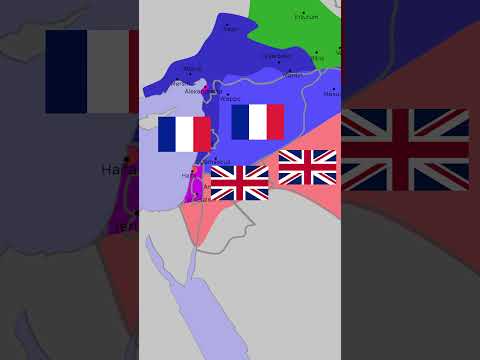
The Sykes–Picot Agreement (1916)
History Hustle
1m 0s152 words~1 min read
YouTube auto captions
Transcript source
YouTube auto captions
This transcript was extracted from YouTube's auto-generated caption track. The transcript below is server-rendered so it can be read, searched, cited, and shared without opening the original YouTube player.
Pull quotes
[0:00]The 1916 Sykes-Picot Agreement, a secret understanding between Britain and France during World War I.
[0:00]Here they discussed and agreed upon proposed post-war spheres of influence in the Middle East once the Ottoman Empire had been defeated.
[0:00]Named after diplomats, Sir Mark Sykes and Francois George Picot, the Accord aimed to address conflicting wartime promises made to Arab leaders by the allies.
[0:00]France would control parts of present-day Syria and Lebanon, while Britain would oversee Iraq, Jordan, and Palestine.
Use this transcript
Related transcript hubs
Watch on YouTube
Share
MORE TRANSCRIPTS


