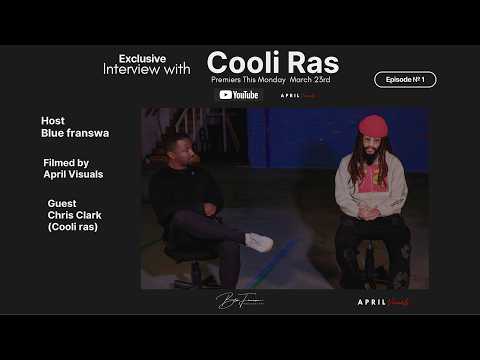
[0:00]Today I have the absolute honor of interviewing Chris Clark. He's a phenomenal artist. And we're going to take some time to get to know him and learn more about his family, his art, and um the place he's making in AI. Chris Clark is a multi-dimensional artist whose work lives at the intersection of technology, imagination, and live experiences. Chris is known for pushing creative boundaries through painting, mixed media, and he calls it photography. A process he describes as taking pictures with your mind. His work reinvented the past while imagining far into the future using creativity as a way to explore memory, identity, culture, and possibility. For Chris, art isn't limited to just one form. Sometimes it appears in ink, sometimes in oil, acrylic, spray paint, words, music, or AI generated visuals. Depending on what he's feeling and what the idea demands, Chris is going to always make timeless work. His work reflects both personal reflection and collective experiences, inviting conversation. So we like to welcome Chris. My man. What's good with you man?
[1:22]Um, as a photographer, um, I look at what I do as a medium to capture the moment. Um, how do you see yourself as an artist like when it comes to what you see that what you see and what you feel like is art? I've always felt like, like being an artist, like any kind of creator, it's kind of like a form of journalism. So, like we're capturing moments and we're capturing history like living history in real time. So, like for me and my art practice, I kind of treat it like I'm writing in a diary. So I'm I'm talking about like real world things, um, and not just like like stuff you see in the news but like things that affect me personally. And so just like writing in a diary, but I'm just putting it in images on on canvas. So like anything that's important to me, um, things that I like, things that make me happy, things that make me sad, um, some political stuff, some social issues and stuff, but yeah, it's a form of journalism. And so I'm just trying to record what I see, um, and hopefully it'll mean something later in the future to people who see it. That's exactly why I asked you that. Um, I was in Atlanta last week, I went to the High Museum of Art and um, they featured, I'm not going to feature, I'm not going to tell you the artist name because it wasn't nobody from my descent, but it was the fact that it was in the 1800s. You could tell that he probably had money and he had a very distinctive style of fine art painting. And um, and it was in the 1800s, but it was he was in the mountains of Brazil and you can see that there was some kind of civilization. Um, there was somebody people just enjoying the view, mountains, water, and I was just thinking like, wow, this guy allowed us to see what he was looking at. You could tell he was just sitting there, painting nature and the people he, you know, he included the like very detailed of the mountains and what everything looked at at that moment in the 1800s. And I was just sitting there like, people were very carefree and it was the fact that this painter captured that, you know what I'm saying? Like he is like from the 1800s and that and then what what who pointed it out was someone who's not even an art. He was like, man, I can't believe they did this in the 1800s. And I was like, wow. So do you feel like you're not only recording history, but do you feel like you're a storyteller? Oh, yeah, most definitely. Um, it's almost like like a visual time machine too. Being able to transport people from the future to like your time and what you saw and how things were in the world. You know, there's a lot of political art right now. Yeah, yeah, yeah, yeah. based on our current administration. So people will be able to look back in and visually see the stories of what we were experiencing, like everything from ice and deportation and all that stuff. Man, that's deep. Um, before I became a photographer, I had a fascination with um, um, come up movies, like people who were like rob art, uh, like like heist movies. And sometimes it'll be like diamonds or it'll be like someone stealing like a replica of a of a um, um, like what's his name? What's the uh artist name that painted the the 16 Leonardo Leonardo da Vinci, yeah, and I'll be seeing people they'll be stealing that art and I just be like thinking like, like, you can you could really make, you can really like, get your hands on that and make a lot of money, like, you know, but some people duplicate it and sell that. And so I'll just be looking at how people be bidding on certain things and then there's somebody like maybe in there who may not have any money, but they'll be like looking at everything. So I used to always have a a fascination with people who are, who will see value in things and want to go through grave limbs to just steal it, to sell it. I used to be like, wow, I wish my stuff was I would, you know, again, this was before I was a photographer, but I used to just admire, not that I, you know, I'm I'm not someone that would be considered a thief, but I just admired someone would put so much energy and thought in stealing something valuable, not even money, but art, or a diamond, something like, you know what I'm saying? Like, if you created someone, someone seeing and they're like, I want that. So whatever I got to do to get it, I'm going to steal it so I can sell it. So I I always had a fascination with just the intent, you know what I'm saying? Now, with your art, do you have, do you intentionally just like go out and just like create stuff on a daily basis, or do you just like, it just comes to you. Um, a little bit of everything. So it really depends on how I'm feeling. Um, it depends on what's going on in the world. Um, what's going on in my world at the time. Like sometimes I I'll depict um, like my children or I'll depict things that I'm studying. Like I know one time, I was in Miami, at my grandparent's house, and I always wear this big rings, actually um, Marcus Garvey. Marcus Garvey, yeah. And she was like, what's that on your ring? I was like, Marcus Garvey and she was like, what you know about Marcus Garvey? So I I made a piece about it like all the stuff I knew about him. So sometimes it's random. Yeah, so it's just random stuff sometimes. A lot of times I'm I'm recording like what's going on in the world at the time. Um, what kind of relationship that you have with your your parents and like, you know, like grandparents. What kind of relationships? What at a young age, what kind of parents did you have with them? Was it dynamic? Was it cool? Was it like, did they help foster your your artistry? Oh, yeah. So like my mom, um, that's actually where I get my art from. You know, I did music too, so I get that from my dad. He played in a reggae band when I was growing up, played bass guitar. But yeah, they always fostered it. They always, um, poured into it. Bought me paint, bought me easels, color pencils, sketch pads, all that stuff. And like this is something I know like for a lot of people, you can start off as a hobby, just something they do in their spare time. But I think for me like, I think it's rare for somebody to know like, who they want to be, or what they want to do like from a small age. So from when I was young, it was always art. It was always art and music. So they saw that at an early age and so they put, you know, the right tools in my hand, instruments, you know, when I was doing music, um, recording equipment when I got a little older and got into music production and stuff and I remember, um, when I was a kid, they used to be this commercial that came on that had had like a drawing test. Which one? Like they were sending you a drawing test in the mail and you can go to this drawing school. And I remember, um, like I begged my mom could I do this test. And so we we signed up for it. They sent me the little, it's like a little brochure, like, you got to draw a pirate, draw a dog on one side. And, um, like a guy actually came from the school, came to the house and met me and all that stuff. It was crazy. Yeah. Yeah.
[8:31]Um, one thing that I admire you from afar, because you know, we would pass in certain circles, was that you are a father, and you don't mind uplifting your kids publicly. And then you don't mind showing the love that you have for your, not only just your family, but your wife. And it's always like, you know, of course, nothing's it nothing can never be perfect, but it's just that you take the time to showcase your life. How hard is that in today's society to be like, you know, you know, like to to show that you, you know, in a, you know, that you're happy in the marriage and you father the kids like like is that tough for you like behind the scenes? Cause people don't see the everyday behind the scene things like kids fighting, wife being angry. Yeah. Yeah. What's that what's what's life like for Chris? Behind off social media. Behind social, behind social. I don't know, I I think I'm pretty I think I'm pretty transparent on social media. I mean, of course, you don't show like all the stuff, but I mean life is is real. Like you said, like kids fighting. My kids fight all the time. I share that stuff.
[9:48]You know, me and my wife, we we don't always see eye to eye. But I think that's a part of what makes like a relationship last. Like how to say Iron sharpen Iron. Like my wife is is very intelligent, um, she's probably a little bit smarter than me. Y'all can edit that part out. Yeah. Yeah, she she's very bright, very witty. So you know, from time to time we bump heads, but it's I think it's because we both think we know it all. We got the right answer, but I don't know, I love it. I love sharing because like I always want people to to see that like I'm a real person. Like I'm not just like, so I had a uh a established artist, colleague of mine like world renowned, famous artist, selling pieces hundreds of thousands of dollars. Um, I was asking her for some career advice one time. And um, so she gave me some advice about my Instagram. She was like, yeah, you know, your Instagram, you know, you got all that family stuff and you know, you need to make it more art focused because when curators come to your page, they just want to see art. And what I told her, I was like, you know, that stuff is is a part of my brand. Like it's a part of who I am. Like, when people um, talk about my art, like a lot of times I I will get people who'll be like, oh, I love your art and all that stuff, but what I really love, is how like you're painting with your children and you and your wife take them to museums and stuff. So, like it it's a part of who I am, so I don't mind sharing it. Like I like sharing it because it it lets the world know that I'm a real person. Like I don't just paint all day. Like I'm I'm playing catch with my son outside or, um, helping kids with homework or me and my wife are doing something, I'm supporting one of her events that her got out. So. Yeah. Yeah. Do you feel like you're going to have like a uh uh uh, you know, like everyone every once in a while in life there there's always that one person of each generation. like they'll never be another Bruce Lee. They'll never be another Michael Jordan. They'll never never you know, like like do you feel like you are birthing and and raising the next generation of a superstar in in in your family? Well, I don't want to speak too soon. I don't want to jinx anything, but I think all of them everybody probably feels that way about their children, but they each of them are Nah, but you know though when like I'm talking about like you know, when you see somebody, you be like, a prodigy Yeah, yeah, yeah, yeah. Yeah, yeah, each of them are are special in their own way. Like I talk about my oldest daughter a lot just because she she's do The one you did the book with, right? Yeah, yeah. Just because she's the oldest. Like they all are exceptional in art. Um, but her art is like like she can draw better than me right now. And she's just turned 14. And so she's probably going to be, I mean, they all are, but yeah, like like her art is is next level. Like I'm always impressed. And not because she's my daughter, like I'm being biased, but like Wow. It it's crazy. Like I wasn't doing it at 13. Wow. Wow. Um, what year that was when you and your daughter produced um, um, published the your first book together? So I I started creating that book in 2014. We didn't publish it until 2017. So she was like, she was about four. Was she excited? That was like, hey, I published a book with my dad. Nope. Our kids don't care. Like it's normal. Well, my kids don't care like going to museums or like, she was just in the come not the come in the mocha. So that big show we had there at contemporary. I did a portrait of her in there. She didn't care like it's just everyday life to them. They're just used to it.
[13:46]Man. Um, real quick, uh, because I I really want to dive deep into the AI thing. Um, out of all the accomplishments and achievements that you, um, came across or received, what was your favorite like publication or highest form of like, um, notoriety that you feel like you of gotten like from all because if you Google Chris Clark, a bunch of stuff come up like, you know, like I know you, um, had, uh, some artwork in Africa. Yeah. Mhm.
[14:21]Um, like what was like the like the highest, like achievement you feel like, okay, I'm I'm I made my mark in the in this world. Okay. So I always tell this story. So when I was a kid, growing up in Tallahasse, we had like three radio stations we listen to. So in the morning, you listen to Tom Joyner on 961, then we had a station 100.7 the beat. They had a show called, I can't remember it was either Russ Power or Doug Banks, one of those shows. But anyway, on one of those shows, they were interviewing Russell Simmons one morning, and they asked him the same question like, how did you know when you made it like, is it when you made your first million dollars, or when you were able to buy a Rolls Royce? And uh Russell Simmons said, I knew that I had made it when I was able to help somebody else attain the same level of success that I did. So that's my answer to it. Ah, shoot. So when I was, so when I was able to help the next person, then I was like, okay, I'm I'm doing a little bit of something.
[15:36]Wow. Wow, that's deep. Um, as a photographer, I'm I'm I'm just going to be transparent. As a photographer, AI, when it first came out, gave me a little, uh, gave me a little scare and I'm, you know, like I was very uncomfortable because I was like, wait a minute. So, I got to figure something else out. But it challenged me to say, okay, hey, you're either going to stick with it or evolve even more. Um, with you, uh, when I when I when I seen the article, they, um, you're like one of the, like, you're you're on the forefront of AI when it came to art, regenerating, uh, images or the images that you created. Um, did did AI come to you or did you go to it when it first came out? Like how did you, how did you create that relationship with AI? Like what was your first like connection with AI? Because when I first saw, I really like my my my first connection with AI was, I was like, nah, I'm not going to get into it. Yeah, so I didn't I didn't know anything about AI. What's crazy is, I was introduced to AI by a photographer. Really? Who was using it, um, and not like for photography but just like for fun, just like generating images of like strong black women and and like, uh sci-fi, Afro futuristic scenes. I was like, what is that? And so she, um, she told me, I don't know if I can say her name, like I said, um, Cheryl McCain, you're probably know Cheryl Oh, yeah, yeah, yeah, she dope. Yeah, you can say her name. Yeah. Yeah. Cheryl introduced me to AI. So she walked me through it like, this is how it works. That and that's when, uh mid Journey first came up. Well it didn't first come up, but that's around the time. That was 2021. So that was when it it just got on the scene. And I remember my first time using it, me and my wife were watching something on Netflix and so I was just playing around with it and when I generated those first, uh four images. I was like, you got to pause the TV real quick. Like I got to show you this. And she over there like, I don't want like, I don't want to see that stuff. And like my mom was just blown because I was like, like I saw more than just, um, I don't know, I think most people, when they saw AI, they were like, oh, this is going to make my job absolutely or this is going to like take away from what I do. But when I saw it, I'm like, this is going to elevate what I do. Like I can use this to do like far greater things than what I'm doing now. So, it it was like a light bulb went off in my mind when I first started using it. But my so for instance, like you can use AI, but you don't need to buy paint anymore. You don't need to buy canvass. You would you can create everything from AI like that would elevate you, but what about those mom and pop stores that that take the time to create the kind of texture paint that you use or the kind of, you know, like, like, you wouldn't really need those anymore because you can create it and then print it on any kind of paper you want. Yeah, well, see that's that's the thing. So traditional art would never go out of style. Like a an actual painting with a brush is not the same as printing it off on a piece of paper. So that that's different. So the way that I use AI, so like I saw a meme one time, it says something to the effect of I haven't reached, what is it? My skillset hasn't reached like the like what my creativity is at. So like sometimes I have like these far out ideas, but I can't even begin to like, put it together to get it onto a canvas. And so that's kind of what AI helped me do. So like there are things, so basically AI, is just like using Google. So say you ask me to paint a picture of a chicken in some overalls throwing a frisbee, right? So I'm going to go on Google. I'm going to search chicken. Find the right chicken. Then I'm going to go on Google. Search overalls. I'm going to go on Google. Search frisbee. And then figure out a way to put all that together. AI does that 100 million times faster. So I can type in AI chicken and overalls throwing a frisbee, and it it has access to all the images of like infinity. And it'll put something together and I'll be like, okay, that's what it looks like. Now I don't have to copy that. I can just use that as like a base, like like a blueprint, it's inspiration. But it's 10 times faster than me searching each thing. And so that's how I use it. Ah. So you use AI as a tool. It's a tool. Like sometimes I put my own art in AI. So like one of my most popular images y'all probably seen it, um, it's the like the kids I do that have the dreads and have like the shades. So that started from actually my children's book. So I was creating a new character for it. Um, and I wanted him to be based off me. I always wear like these little around, um, sunglasses. And so I did this little sketch. I put the sketch in AI, created some different variations of it. I found one that I liked. And then I took that one that I liked, and I painted it on canvas. Like I actually painted it with oil paint. And I took a picture of that painting. I put that painting back in there, created some more variations of that. So it's like I'm using my own art to like, build upon it and that. That's dope.
[21:10]Ah, that's dope. Do you, um, work well with other curators, like speak like people who have spaces and events and they curate, like do you work well with those or you feel like you could be your own curator because you know your art, like you don't have to partner and collaborate. Do you do you see any benefits with that? Yeah, I work with care. I mean, I do a lot of um, art shows and like different exhibitions. I think it just depends on who it is. Um, I think the the more or the higher you rise in your career, like certain things start to fall off and and like, it's not because like you too good, but like just certain things don't serve you anymore. So like when I first started, like I started like just like anybody else. I did stuff in coffee shops and stuff like that. So now I'm at the point where I can do um, like museum shows and like certain galleries and stuff. So, you had a issue with someone, only reason I'm mentioning it is like, how do you safeguard yourself from that in the future and an issue with someone in New York? Um, and it was like one of my first, because I, you know, you're very expressive on social media. But it was my one of my first time kind of seeing you snap on somebody. Yeah.
[22:15]Yeah.
[22:25]Like how do you safeguard like, are you more prepared to over you know, like, are you able to see things in people before you even go that route? Because I'm sure they didn't have like, do they have a reputation prior to you working with them? They did, but I didn't know it. So I I didn't I didn't know anything about the person. But there was like a feeling there. And so like early on, you know, he reached out to me and he wanted to represent me, um, in his gallery back home in, uh, Oklahoma. And I, um, I had a bunch of questions. I basically had a bunch of questions, um, so I wouldn't just have to come out and say no. I just asked questions that I knew couldn't be answered. So I didn't do it, but I I kind of had like a little feeling then. But yeah, I didn't I didn't know about the the reputation. Yeah. I I soon found out about it. And um, like, but you know, it's New York. That was like my first time showing work in New York at a gallery. And so that's all my mind was on. He was snapping. Showing in New York. But um, yeah, after that things just started to Unravel. It started to unravel. First with other artists and then like there are things I started to notice and then it happened with me and then it was just a whole big thing. Like Did you ever get uh compensated? Did you ever get your art was your art taking? Yeah. Yeah, okay. yeah, so did you ever get compensated? No, I didn't get compensated. I didn't get my art back. A lot of artists lost their art. Um, a lot of collectors who purchased art from a gallery. You know, they spent their money, they never got the art. And so the last we all heard, um, because we had like a big group of artists who had um, came together.
[24:05]Yeah, so last we all heard, the art was in a storage facility somewhere in New York. Um, the storage was about to get auctioned off because it wasn't paid for. And so he had made, I guess like the minimum payment that you had to make to keep it. So, yeah, he still has the the storage with people's artwork and stuff. So. Yeah, you can't and nobody haven't able to find. Yeah. Yeah, so that kind of that kind of scarred me a little bit from wanting to work with galleries, but like everybody's different here. So there's so many good galleries and some good people out there. Have you did anything in New York since then, because that was like what, two was it two years ago? That was 20, that was 2021. Oh, that's three, okay. Yeah. Five years ago. We're going on 20 Yeah. I did I've done other things in New York since then. New York, okay, okay. Other little, uh, gallery shows and stuff, little small stuff. So, have you been taken on the Monica? Because I when I read, when I was reading your bio about photography, um, have you ever, um, replicated any pictures that other people took in into your art with AI?
[28:47]Uh, let me have a No. So like, uh, like took you know like, like took pictures that, you know, like with your phone or someone a professional photographer like took that picture, put it in AI and replicated just to give it a more depth and more creativity to it. I don't think I've done that. I probably like painted some some photographs, but I've never put like photographs like if I'm using AI, like if I'm not just using like straight up imagination, then I'm using like my own work. So I don't put like other stuff in there. Not even like photographs. Ah, I got you. So you only put your, okay, that's dope. That's good. Um, uh, let me ask you an important question. Do you feel like you're like, are you in the process of like just preparing your kids for like the realities of being black and being creative? Like, are you doing your part of like letting them know like what's to come, because being creative and being black is a whole new, um, phenomenon. It's it's different, you know what I'm saying? Like, there's there's there's good and there's bad. Oh yeah, yeah. Like like Kanye West. I feel like, like, he was super genius at a young age. And then he as he got older, it's like, the world kind of like put their own little, you know, title on you. They put that pressure. They put that, you know, and then it's like you got to think for yourself, then you try to think for them and then you and then next thing you know, you just you just turn into something else, you know what I'm saying? Like, are you preparing them for what's to come? Being black and creative. I try my best to. It's kind of hard, um, with these new age kids. I think our generation was probably like the last generation who, um, I think like for us like your blackness, like your culture, all that stuff was very like important like to us and like integral to to like who we are. We learned about it in school. Um, our parents drilled it into us and and so like, I try to do it with my kids, but it's a little harder in this time that they're living in because they're exposed to so much and like everybody's their friend, like, like they don't, like I I catch myself sometimes like talking to them about certain things. They'll like, yeah, but this person's my friend and that person. I don't care about this and that. And so I I got to remember like, this is not like the 90s, like when I was growing up, like it's different. Like it's different. It's different.
[36:50]So I I try to be real in my art because a lot of times, you you might have a thought or a way that you feel and you might think, oh, this I'm the only person who feels this way, but millions of people in the world feel that way. But we're always waiting on the one person to say it first. Before we say, oh yeah, yeah, yeah, I feel like that. I do that too. And so I try to be real in my art. So that way when when the viewer sees it, like they can see like a bit of themself. Like they see a bit of their story in it like, oh yeah, that you know, my family grew up like that or, oh, he he draws with his daughter. I used to draw with my dad when I was growing up. So I I want the I want the viewer to see like a bit of their story. Right, got you. Looking at my work. So not just some pretty you can hang over the couch, but like like something real. Something real. Got you. Got you.


