[0:00]there's lots of people we can interview that have been very successful in life, but real success I think is how do you discipline your disappointment? How do you find something that keeps you driven no matter what comes at you? How do you become relentless? Doing along the way with joy, not just someday when you get there. I was struck from the very first time I met you was the level of joy you bring to things. There are people who are like default positive and default happy. Doesn't mean you're always happy or always positive. It means something has to happen to make you unhappier, unpositive. If you're the kind of person who like needs positive things to happen before you can be positive, like this is just too hard. Just having that like, like a joyful grip. Ultramarathons are one of my hobbies, in which it sounds like just such terrible suffering to most people. When you're out in ultra marathons, there will literally be people puking or peeling like blisters off the bottom of their feet and you're like, you're doing amazing, and they will always turn to you and smile. And there's somehow if you can transform suffering into smiling and positive motion, like, like, that is the way. I know recently you've gone through some really tough stretches. I know you lost your wife to a 13-year battle of cancer last December and you're a dad of four. I can only imagine going through all of that, you know, it's not like you're just a businessman or on a mission. Nobody escapes in life. I always show people, it doesn't matter who you are, how successful you are, how good you are, how spiritual you are, we all will experience extraordinary stress, extraordinary pain at times. And it defines us, how we deal with it. But this man has had massive vision, but even better, he has that rare ability to execute. And he's formed a company called ICON, based in Austin, Texas. It is the leader in global standards for 3D printing construction. I know you're working on with NASA on the moon, you're working with the military, you know, I think in Boston, I read, you're now doing some sustainable housing for the homeless out there. You know, I think everybody's lives truthfully are a bit of a winding path and you try to tell the story in a straight line, but, uh, maybe the easiest way is to connect the dots about how I got here. You know, I grew up in small town, Southeast Texas, and Southeast Texas was the most biodiverse region of all of America. But then also, uh, my hometown is like the largest concentration of petrochemical refineries in America. So even in my small, my small town graduating class, I had friends that had cancer, there's signs up around town to say don't eat the fish in this water. My hometown is destroyed multiple times by hurricanes and has to get sort of rebuilt with the same sort of sticks and drywall that it'd been built within the first place. That's making me asking questions even further about the way we build, we should be doing better than we were. So got to work in the sustainable building industry building homes and then while doing that, also got a master's degree in space resources, like Aerospace engineering. So the ultimate sort of punch line is like, If you think about houses all day and space robots all night, you end up starting a company like ICON, that uses robots to build better buildings. How much of humanity doesn't have a home, so people understand how important it is to find a way to be able to do this at scale with speed, cheaper. There are between one and a half and two billion people who have a housing situation that if they were people you loved, you could not stand it. You could not stand it. The real competitor is the way things are done, which are so obviously not delivering the value and goods that society needs out of its construction and housing stock. The the challenge though, is is like this is a very old industry and it has very well established network effects, I already know my frame, I know my paint supplier, like very established building codes and regulations, very established ways of insuring and financing. And then you're trying to challenge a very powerful adversary at the same moment where, uh, housing is under immense pressure from like macroeconomic forces. Right, inflation, high mortgage rates. And so it's just a very difficult moment to like to go fight a an 800-pound gorilla in a in a thunderstorm, right? But like, we have to be brave and we have to try. What's your mission in terms of the world? What's driven you in that area? I just think that at the top people should understand that because it's an incredible breakthrough. I don't think most people have any clue. Company, there's like a problem side of the coin and there's an opportunity side of the coin. The problem side is like, we need to solve the global housing crisis. Like it's hard very hard to imagine the future being as incredible as I think you two gentlemen believe it can be, if we don't get the basics. Right, um, and so that's like the problem solved, but then there's like the the opportunity, uh, so it's like solving big problems but also like creating massive potential opportunities, including reimagining architecture. You can only get so much motivation from problem-solving, there has to be like some like better, higher vision that also inspires you. And luckily at ICON, we sort of get both of those things. What's helped you to pull through all this as a dad, as a human being, as a businessman, in the midst of all this is a sense of mission, is it your trust in God? What is it that's pulled you through? Because you've managed through these experiences and incredibly well for someone who's dealt with so much pressure and so much challenge. Yeah, I mean, you, I mean, just to honor her a bit. Yeah, my wife's name is Jenny and, uh, we were together for 20 years. And she was the first lady of ICON. And so like, she was like all in for ICON. She was my partner and my friend. Um, and it's, it's a loss. It's like an amputation. But you are so correct to say that like, no one escapes. There's no escaping suffering. Um, it is sort of the nature of our situation that there is, that there is, uh, that there is like loss and grief in life and I don't know how everyone handles it, but I, I can say what has helped me is is you're, you one of them you said was like, I am a man of faith, I'm, I, I'm a Christian and my, my Christian faith. It which is a faith that has suffering in view, right? Sort of like with the suffering savior, right? So like, I had some sort of moral and ethical and spiritual, uh, foundation for receiving suffering and and transforming transfiguring it into something positive. I learned that watching my wife suffer and so to sort of redirect the suffering into perhaps like awareness of like what a gift life is, what a gift these opportunities are into like, into into to use these spiritual resources to transform it from toxic to, to to fertilizer for positive activity. Uh, deep friendships that I've already made, I am surrounded by people who love and support me, including the people here at ICON who like went with me on this journey. And so so faith, friendships and then what would I, I couldn't have asked for or hope for is like, I, I still open my eyes to things I'm remarkably grateful for. I think a lot of people who grieve and suffering, you can drown it. And I open my eyes today and I have the exact two jobs I want. I get to be a father to those four kids, and if I had a billion dollars, I would start ICON. Like this is the work I want to be doing and so even in the midst of my grief, I get to open my eyes to like these very positive propulsive forces. Uh, I took like a six week leave after, after Jenny died and that last week, like once the kids were back in school and I was still like sitting at home, I was like, I don't know what I'm doing when I, but I cannot just sit at home again. And so movement was good, like get like somehow like crawling back in the saddle, even when you don't know how you're going to quite get through the day is the right instinct. Uh, and so those are the things that have helped me. I I appreciate you sharing that. I hesitate to ask you because I don't want to create pain, pain for you, but I think, uh, the lessons you have in life for us are as important or more important than the lessons in business. And when you deal with life well, you can easily deal with business by contrast. It's no comparison what you face there. So thank you for sharing that because I hope it'll touch people and remind people that we all go through it and that there is a way through it and it's not just to stay in suffering as you said. I've been in that home with you as you know, it's magnificent and seeing the kinds of construction you can do that you normally see like in a church or a mosque or something that you could never do at a at a cost effective place. But you're doing that now. This home I'm sitting in right here is called House Zero and it was the first house we ever designed specifically to be 3D printed. And so this house was designed by a one of the very best architects in Texas, Lake Flato and the challenge was like, I don't want there to be a straight line anywhere in the printed. Like like really turn up organic form and curvature and these things that look very fancy, but to a 3D printer at the same price as a straight line. Right, like really show off a little bit with what 3D print could mean. And as I walked, people come to this house when we opened it up to the public and saw how bold over and excited and motivated and happy and optimistic. Conversations about housing are often like so damn depressing and how much this, this house inspired people even as the first one of its kind. It made me feel like, all right, I'm not just telling myself stories, you're like, this really could be the most incredible way to build. but as an entrepreneur, you actually like never take anything for grant. Like in a sense, like, I almost am still living and behaving like this is not guaranteed. hunger is what makes somebody stay successful not just for the day or the week or the month or the year, but decade after decade and you clearly have that. I work really hard to like surface during interviews to the degree I can, how do you manage stress? How do you stay healthy? How do you stay positive? Tell me the biggest problem you've ever had to overcome. Tell me problems you've, you've solved in the past. Like these are the kind of ways I try to like surface this in conversation because like so many other things you can learn, I, I can help add fuel to your fire as the CEO, but like I can't create the fire. You have to have that fire within yourself. That sort of positive, propulsive, optimistic fire in your belly. And I think that that's the a missing ingredient for most people in life. It's one thing to have grit, it's another thing to have grit with joy. That's, that's a unique combination that you embody and I'm super grateful that we're going to share your story and a little bit of you today. And I just want to thank you for being who you are, brother. What do you want your legacy to be? How do you want to be remembered? And what do you want to remember most for? What a dangerously self-serving and potentially ego inflating, uh, question. Uh, I'll try to be honest. Um, I think I want to be known as a man who faced trials and difficulty bravely and joyfully, but like, but in service in service of making of reducing suffering in the world. And as making the world more beautiful and have maybe like being just like one among many who like held open the door to a more incredible future.
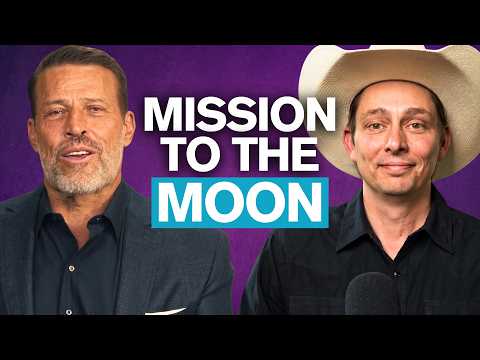
What Success Actually Looks Like When Nobody's Watching | Jason Ballard x Tony Robbins
Tony Robbins
10m 7s2,199 words~11 min read
YouTube auto captions
Transcript source
YouTube auto captions
This transcript was extracted from YouTube's auto-generated caption track. The transcript below is server-rendered so it can be read, searched, cited, and shared without opening the original YouTube player.
Pull quotes
[0:00]there's lots of people we can interview that have been very successful in life, but real success I think is how do you discipline your disappointment?
[0:00]I was struck from the very first time I met you was the level of joy you bring to things.
[0:00]If you're the kind of person who like needs positive things to happen before you can be positive, like this is just too hard.
[0:00]Ultramarathons are one of my hobbies, in which it sounds like just such terrible suffering to most people.
Use this transcript
Related transcript hubs
Watch on YouTube
Share
MORE TRANSCRIPTS


