[0:03]Hello everyone, teacher Lela here. Have you wondered about what methods could help you to be a more effective English tutor? We are going to discuss a helpful teaching method called the direct approach. What might that be? I'm glad you asked. The direct approach to language learning is a form of immersion method. You may have heard of learning language by immersion before. It simply means that you are taught a language by only hearing and communicating in the language that you are trying to learn. You are using this method with your students in the lessons as you only speak English with them and not Chinese. The direct approach extends this idea into a few important points. This method focuses on language use instead of language structure and grammar rules. Notice that in the curriculum that you teach, there is not a large focus on learning the rules of the English language. The focus is instead shifted to oral communication with target words and target language. You have probably noticed that each lesson has different target words and language that is heavily used throughout the class. In a beginner class, it might be something like, hello, my name is Sarah. How are you? And in an advanced class, it might be something like, do you think cherries are better than grapes? Maybe, but I also think oranges are good too. One of the most important aspects of the direct approach instruction is you. Yes, the native-speaking teacher is integral as this method does not rely on translations, but full immersion into the language being learned. There are three main methods used in the direct approach. First is the Rassius method, which focuses on listening and speaking over reading and writing. This method emphasizes the teacher using drama and creative actions to convey vocabulary words and target language. For example, the teacher could act out cracking an egg and cooking it in a pan to teach the word cook. Another similar method is TPR. You are probably familiar with using this method in your lessons. Total physical response involves modeling actions or using pictures for students to learn vocabulary words and target phrases. For example, you would wave when teaching the word hello. The students would wave back at you and eventually speak the word with the action. Hello. The third method is TPR storytelling. This method sort of combines the previous mentioned methods in a connective context. For example, the students could act out a short story in groups taking turns with speaking roleplay. So what does this have to do with teaching your classes? Employing activities that use the direct approach method can help you make your classes more interactive and engaging, all while helping the students to create a meaningful connection to the target language in the lesson. Let's look at some examples of activities. A fun but easy activity is to do drill commands. You can use this similar to Simon says, with words like stand up, sit down, and touch your head. The students can also take turns being the leader and calling out the commands. This activity would work well in a beginner lesson with simple action words. Another great idea is to use TPR for words that you speak, but sometimes use the wrong action with the word and let the students correct the action. For example, say the word eyes, but touch your nose and let the students show you the correct action. A third engaging activity is to take turns rolling a dice for each student. The number on the dice is the number of commands that a student would act out. For example, if the student rolls a three, you would give them three commands to act out. Touch your nose, stand up, and raise your hand. The student would then act out the string of commands. These are just a few ideas of engaging activities using the direct approach that you can use in your classrooms. Not only does this method create an entertaining lesson for the students, but it has also been proven by research to create a meaningful lasting memory of the language for the students, and that is our goal. Do you have any activities that use the direct approach that you like to use in your classes? I would love to hear your ideas. Thanks for watching.
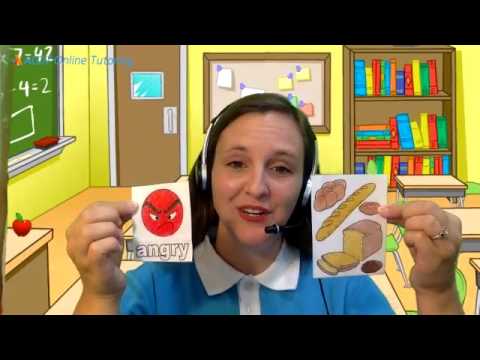
Natural Approach / Direct Method of Language Teaching
ALO7 English
4m 35s733 words~4 min read
YouTube auto captions
Transcript source
YouTube auto captions
This transcript was extracted from YouTube's auto-generated caption track. The transcript below is server-rendered so it can be read, searched, cited, and shared without opening the original YouTube player.
Pull quotes
[0:03]Have you wondered about what methods could help you to be a more effective English tutor?
[0:03]It simply means that you are taught a language by only hearing and communicating in the language that you are trying to learn.
[0:03]You are using this method with your students in the lessons as you only speak English with them and not Chinese.
[0:03]This method focuses on language use instead of language structure and grammar rules.
Use this transcript
Related transcript hubs
Watch on YouTube
Share
MORE TRANSCRIPTS


