[0:03]Engine 11 to respond to on fire to 11 1232 and Echo North.
[0:20]So I got called to investigate a house fire.
[0:26]Let me make way to the fire wrench station, taking fire investigation unit, car 100. Central 1 for investigator cross. Central car 100.
[0:39]Car 100 from central, go ahead. Car 100's on route 2.
[0:45]Probably in there. Car 100's on route 2. Probably there. 1 backup one. Back up group one. We have secondary complete on main floor. We're going to leave it for inspection and work with that. So on the way to the fire scene, you're always thinking about what kind of hazards you might face. The fire crews are still on scene fighting the fire, so you got to make sure that everything is safe before you enter the building. They will be putting out the remainder of the fire and making sure all the CO, carbon monoxide, is cleared out before they turn the scene over to you and they make sure it's safe for you to enter. All the fire is out and the smoke is cleared before you get to go into the building. One backup group one.
[1:33]Back up group one. We always respond to the scene safely. You're not an emergency vehicle so we don't go lights and sirens. We get there safely and then we just do our job. Once we get to the scene we report to command operations, we interview the fire crews. Find out what they saw when they first arrived regarding the fire, and what they did for fire suppression and overhaul. We also interview witnesses and occupants of the building if they're there when the fire occurred.
[2:07]On the way to the fire scene we also listen to the radio to find out what the crews are saying about the fire, what they're doing, what they have done regarding fire suppression. You try and get an overall picture of what you might find at the fire scene when you get there. Back up group one. Firefighter one back up group one. Now we're on scene, just got to figure out what a way to get in here. Once you hear, you start putting the pieces together and work to find the cause and origin of the fire. On scene. Pulling out the hydrant. 1 bar on X false. Firefighter 1 in there.
[2:49]Central car 100.
[2:53]Car 100 from central, go ahead. Car 100's on scene. Car 100 from central, go ahead. So now I'm going to go report to Command, let them know I'm here and they'll just get some information from command and operations, see what they have so far regarding the fire.
[3:16]And then I'll just wait until they turn the scene over to me and then I'll start my fire investigation. Got my mask on, got my notebook. Let's go to work. What fire investigators want to know from the first in fire crew is, what they saw when they first arrived, what part of the building was the smoke and fire coming from, was there more fire outside or was it coming from the inside, was the building vacant or occupied at the time of the fire, was the door locked, opened or forced open by the firefighters, were the windows open, broken or secured, were the smoke alarms or fire alarms sounding, where was the seat of the fire located, how did the fire react with the water, is there anything they thought seemed suspicious, and most importantly, are there any extreme hazards such as holes in floors or stairs, collapsing walls or roof systems. The whole back was full in ball.
[4:06]And then in the back, in the back bedroom on Charlie's side, it's pretty pretty cooked in there too.
[4:21]Exterior for dining. And it was full on. Was this an occupied house? Vacant. Vacant house.
[4:37]Just do a walk around. Check the exterior for fire damage, smoke damage, make note of that. Make note of the broken windows. Crew is back there packing up.
[5:01]Oh yeah. Smoke damage, right? Yeah.
[5:22]Oh yeah. Took down too. Flames are showing from the back porch area when the crews first arrived. Flaming out over to this side. This is the area of origin I'm going to focus on. It appears to be an exterior fire into the interior, but we won't know that till we get in there, start our interior. Fire damage on the deck. Damage to the fence. The heat to the neighboring house. I don't see any fire patterns. Water from suppression. Water coming through. It just looks like a whole lot of smoke. So I don't see any points of origin inside this room. Just smoke deposition on the walls.
[6:11]I'm back to the unit. We keep all our tools, equipment, personal protective equipment, ladder, shovels, rakes, all these tools that we use to dig out a fire scene and put it all back together. And there's our lights that we use to put the lights up. Put my boots on. Oh they're dirty. Most important equipment we have is this mask. Got to protect our lungs. There we go. Now I'm ready. I'm ready to investigate.
[7:04]Start from the A, Alpha side, so goes A front, B side, C, which is Charlie, on the back, D on the other side. So we start from this side, work our way around, take all the pictures on the exterior, then we work our way into the house, and we start from the least amount of fire damage to the most amount of fire damage.
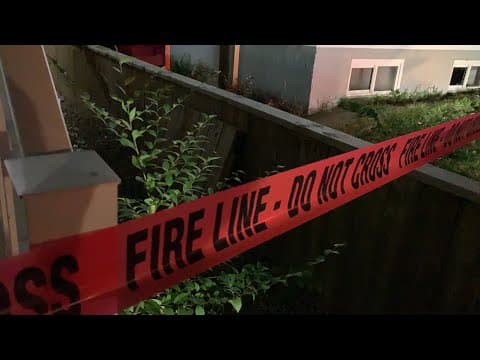
[7:41]We put up the fire tape, keep people out. Tape off the back as well as the front, secure your scene.
[7:52]Always look in the back alley. You might be able to find some clues back here, such as jerry can lids, uh, caps, jerry can, um, spouts, or even jerry cans.
[8:08]Sometimes you'll find a lighter. Command from central. Investigator Cross. We're returning out of commission. Turned scene over to investigator Cross. We're returning out of commission.
[8:29]We still have continuity of scene, so I'm just going to wait for the arson investigator to show up and then we'll continue our fire investigation.
[8:39]Central from central, go ahead. We turned over the scene to investigator Cross, we're returning out of commission.
[8:49]Returned out of commission. Turned scene over to investigator Cross. Arson investigator on scene. Always put our safety cones, traffic cones. Create a safe work area for us. And we have the police here keeping an eye on the scene, they're also here for our safety. Our personal protective equipment, we wear fire gear when we do fire investigations, we also wear coveralls. Um, my coveralls are in the wash. It's been a busy week. So I'll get my PPE, it's called, personal protective equipment on and we'll continue our fire investigation. Arson investigator is here. Central car 100.
[9:35]Car 100 from central, go ahead. Arson investigator is on scene. Arson investigator on scene.
[9:49]Crews arrived and they come to the front of the house. They didn't see anything til they kind of got to the side and it was roaring, ripped into the up the side here. So they came to the back, did an exterior attack, knocked it down and then they went into the front, forced entry in the front door.
[10:33]They forced it open from the inside, actually. It was pretty good.
[10:46]The power was cut off for the house, gas turned off. Fire crews turned it off, natural gas was turned off by the fire crews. It was pretty hot. It was vacant since July.
[11:08]So we work closely with the Saskatoon Police Service, arson investigator. They come to the scenes when it's when we deem it suspicious and they help us do the fire scene examination. So I'll go inside and I'll take all my pictures from the inside, starting from the least amount of fire damage to the most, ruling out all sources of ignition.
[11:35]I'll get my mask up and head in.
[12:08]The bathroom was unaffected, no fire damage, no fire patterns, no points of origin. The walls had smoke depositions on the sides. The plumbing and pipes were intact. The ceiling was affected by smoke and water. The kitchen was also unaffected, no fire patterns, no points of origin. The walls had smoke depositions on the sides. The floor had water and debris. The counter and stove were unaffected. The ceiling was affected by smoke and water. The plumbing was intact. The electrical outlets and lightings were inspected, and no fire patterns exist, ruling out electrical as the source of ignition. All sources of ignition in the kitchen have been ruled out as the cause of the fire. The bedroom was also unaffected, no fire patterns, no points of origin. The walls had smoke depositions on the sides. The floor had water and debris. The window was unaffected. The ceiling was affected by smoke and water. The bed was intact. The plumbing was intact. The electrical outlets and lightings were inspected, and no fire patterns exist, ruling out electrical as the source of ignition. All sources of ignition in the bedroom have been ruled out as the cause of the fire. The back porch was fully involved. The walls had smoke depositions on the sides. The floor had water and debris. The window was shattered. The ceiling was collapsed. The bed was gone. The plumbing was intact. The electrical outlets and lightings were inspected, and no fire patterns exist, ruling out electrical as the source of ignition. All sources of ignition in the back porch have been ruled out as the cause of the fire. The closet was also unaffected, no fire patterns, no points of origin. The walls had smoke depositions on the sides. The floor had water and debris. The window was unaffected. The ceiling was affected by smoke and water. The bed was intact. The plumbing was intact. The electrical outlets and lightings were inspected, and no fire patterns exist, ruling out electrical as the source of ignition. All sources of ignition in the closet have been ruled out as the cause of the fire. The living room was fully involved. The walls had smoke depositions on the sides. The floor had water and debris. The window was shattered. The ceiling was collapsed. The bed was gone. The plumbing was intact. The electrical outlets and lightings were inspected, and no fire patterns exist, ruling out electrical as the source of ignition. All sources of ignition in the living room have been ruled out as the cause of the fire. The attic was fully involved. The walls had smoke depositions on the sides. The floor had water and debris. The window was shattered. The ceiling was collapsed. The bed was gone. The plumbing was intact. The electrical outlets and lightings were inspected, and no fire patterns exist, ruling out electrical as the source of ignition. All sources of ignition in the attic have been ruled out as the cause of the fire. The basement was unaffected, no fire patterns, no points of origin. The walls had smoke depositions on the sides. The floor had water and debris. The window was unaffected. The ceiling was affected by smoke and water. The bed was intact. The plumbing was intact. The electrical outlets and lightings were inspected, and no fire patterns exist, ruling out electrical as the source of ignition. All sources of ignition in the basement have been ruled out as the cause of the fire.
[16:19]Hypothesis: The fire was started by an open flame device such as a lighter or a torch, which was applied to a couch on the back deck of the house. The house was vacant, and had been so since July 2021. The back deck was easily accessible, and the house had no other sources of ignition. The fire spread quickly into the house through the wall and window, and then into the attic. The cause of the fire was intentional. This fire is still under investigation by the Saskatoon Police Service. My recommendations are to secure the house and to develop new programs to prevent future fires. Thanks for your time. Always think fire safety, and please stay safe out there.